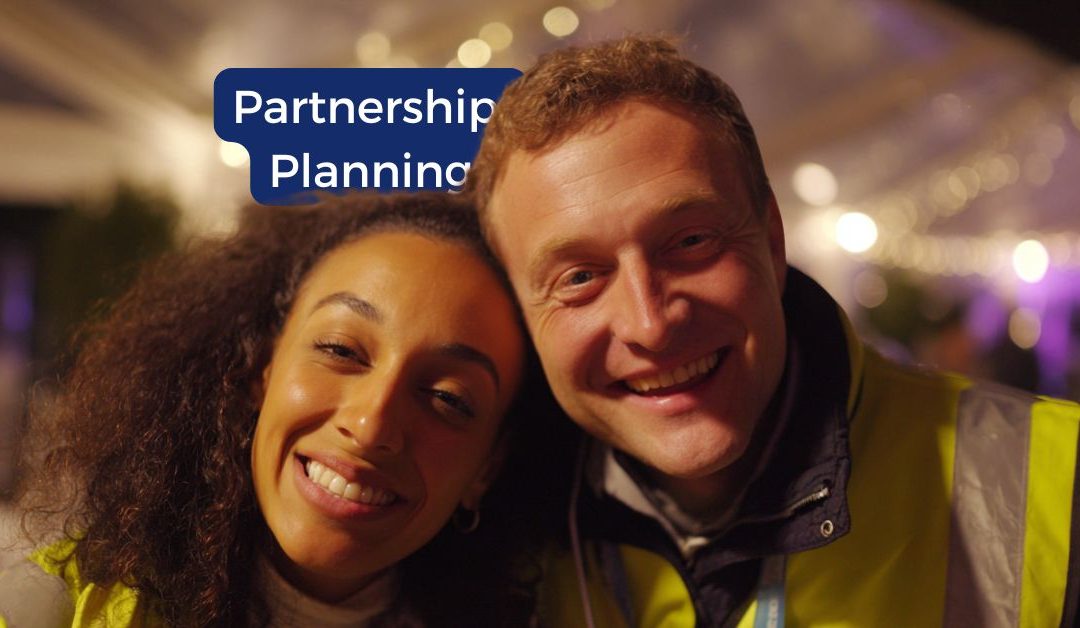
The strongest events are built on partnerships
Ok, so you don’t have to be this close! (above pic)
But there’s a point in every successful event where it becomes impossible to say who “owned” which part of the delivery. Not because roles were unclear, but because collaboration blurred the edges in the best possible way. Power flowed where it was needed. Decisions were made quickly. Problems were solved before they became visible.
Those events don’t happen by accident. They start with partnership.
We’ve been around this industry long enough to know the difference between suppliers who are brought in late and partners who are involved early. The first deliver what’s written on the order. The second help shape what the order should be in the first place.
And that difference shows up everywhere.
The Cost of Working in Isolation
When suppliers operate in silos, events become fragile. Each contractor focuses on their own scope, their own timeline, their own risk. On paper, it looks tidy. On site, it rarely is.
We’ve seen situations where power routes conflicted with access plans, where staging blocked emergency exits, where ground protection arrived too late because no one joined the dots early enough. None of these were caused by incompetence. They were caused by separation.
Everyone did their job. No one owned the whole picture.
What Changes When Collaboration Starts Early
When suppliers are brought into the conversation early, the tone changes immediately. Questions shift from “what are you delivering” to “how does this work together”. Assumptions get tested. Dependencies get exposed. Pressure points appear while there’s still time to design around them.
The build becomes smarter.
The schedule becomes calmer.
The risk profile improves.
Most importantly, the event becomes resilient.
We’ve watched events transform simply because the right people were in the same room at the right time. Infrastructure providers talking directly to production. Power teams aligning with staging. Groundworks planned alongside traffic management. Not as a hierarchy, but as a system.
Trust Is the Real Infrastructure
Partnership planning only works when trust exists. Trust that people will be honest about constraints. Trust that concerns will be raised early, not hidden. Trust that everyone is working toward the same outcome, not just protecting their own contract.
That trust isn’t built in meetings alone. It’s built over seasons. Through consistency. Through doing what you say you’ll do. Through showing up prepared when conditions change.
On the strongest events, collaboration feels natural because it’s habitual. People know each other’s working styles. They understand how decisions are made. They communicate without friction.
Shared Problems, Shared Solutions
Every outdoor event faces pressure. Weather shifts. Ground conditions change. Deliveries slip. Permissions evolve. The difference between stress and control is how those pressures are handled.
In a collaborative environment, problems are shared quickly and solved collectively. Adjustments happen without drama. Alternatives are already known. Responsibility doesn’t bounce around the site.
When partnerships are weak, the opposite happens. Information stalls. Decisions get delayed. Frustration builds. Small issues escalate.
The event feels harder than it needs to be.
Why This Matters More Than Ever
Events are becoming more complex. Sites are tighter. Regulations are more detailed. Audiences expect more comfort, more safety, more sustainability. No single supplier can hold all of that alone.
The future of successful event delivery belongs to teams who plan together, communicate clearly, and respect each other’s expertise. Partnership isn’t a soft concept. It’s a strategic one.
When collaboration works, the audience never notices. They just experience an event that feels effortless, safe, and well run. That effortlessness is the result of people working together long before the first structure appears.
The Quiet Mark of a Good Event
I’ve always believed the best compliment an event team can receive isn’t applause, or praise, or even recognition. It’s silence. No emergencies. No friction. No last-minute rescues.
Just a site that works.
And that silence is built on partnership.