Seasonal Pressure, Permanent Problems
Distribution rarely fails dramatically. It slows first. Pallets begin to queue in the yard. Temporary stacking becomes normal practice. Picking routes tighten. Loading times stretch. No one calls it a crisis. It just becomes “busy season”.
But seasonal pressure has a habit of exposing permanent weaknesses. Space that was adequate in February becomes restrictive in November.
A warehouse that felt efficient at 70% capacity starts to feel congested at 90%. And the operation absorbs the strain quietly until something gives.
In uncertain years, those pressure points are magnified.
When Peaks Stop Being Predictable
Retail cycles used to be clearer. Construction schedules more stable. Manufacturing demand easier to forecast. Now peaks arrive early, last longer, and shift without warning. Stock buffers increase because supply chains feel fragile. Promotional cycles overlap. Returns consume space never designed to hold them.
What was once a seasonal spike becomes a structural bottleneck.
The instinctive reaction is to consider permanent expansion. But permanent buildings solve long-term growth. They don’t solve short-term volatility. And volatility is what most operations are actually facing today.
The Hidden Cost of Congestion
Distribution bottlenecks rarely show up first in financial reports. They show up in behaviour. Forklifts take longer routes. Teams wait for access. Loading bays feel chaotic. Supervisors spend time reorganising space instead of optimising flow. Congestion reduces confidence.
When space is tight, safety margins shrink. Small inefficiencies compound into larger operational drag.
The cost isn’t just square footage. It’s friction.
Creating Breathing Space Without Overcommitting
Temporary distribution space changes the conversation. Instead of asking “Do we need a bigger building?”, the question becomes “Do we need more flexibility right now?”
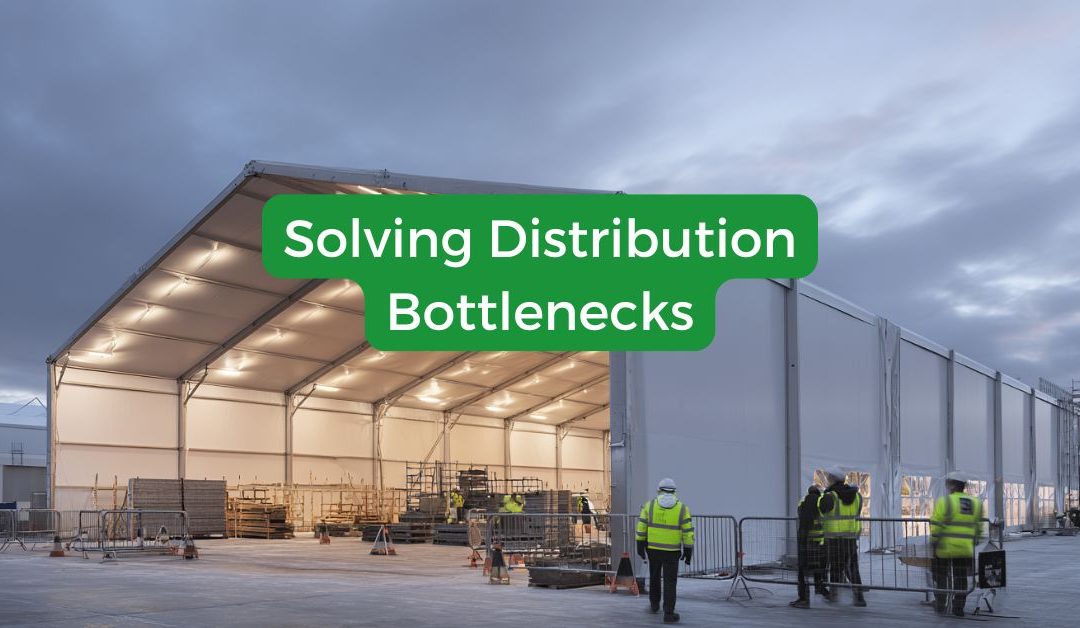
Additional covered space allows overflow stock to be relocated intelligently. Picking areas can be rebalanced. Returns can be segregated. Seasonal inventory can sit under controlled cover without disrupting core operations.
And when the pressure subsides, that space can be reduced, repurposed or removed entirely. It’s not about building permanently. It’s about protecting performance during peak strain.
Distribution Is About Flow
Warehousing is about storage. Distribution is about movement. Temporary structures designed for distribution understand that difference. Wide access points. Clear spans for racking or staging. Defined vehicle routes. Weather protection that keeps loading predictable.
When designed properly, temporary distribution space becomes an extension of the operation, not a satellite complication. It absorbs pressure without fragmenting workflow.
Protecting the Loading Edge
Many bottlenecks occur not inside the warehouse, but at the edge. Loading and unloading under pressure exposes teams to weather delays, vehicle congestion and coordination strain.
Additional covered distribution space stabilises that edge. It creates structured staging areas. It allows goods to transition smoothly between vehicle and facility. It reduces the frantic reshuffling that happens when stock has nowhere deliberate to go.
The result feels calmer. More controlled.
Flexibility as a Strategic Asset
In volatile markets, flexibility is more valuable than ownership. Committing to permanent square footage based on one unpredictable year carries risk.
But doing nothing carries risk too. Temporary distribution space offers a middle ground.
- Fast to deploy.
- Scalable.
- Engineered.
- Compliant.
- Integrated with existing workflows.
It allows operations teams to respond to reality rather than forecasts.
The Smart Question
The real question is not whether seasonal pressure will arrive. It will. The better question is whether your operation is designed to absorb it without slowing down.
If congestion has ever crept into your site during peak periods, you already understand the pattern. Permanent problems don’t always require permanent buildings, sometimes they require breathing room.