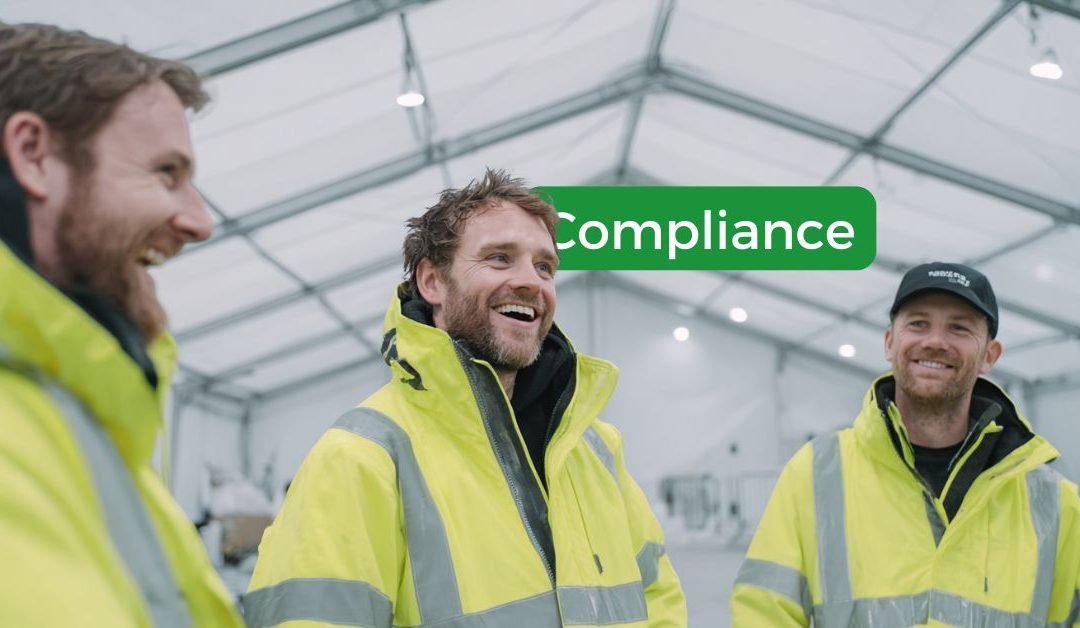
What Operations Teams Need to Know
When the word “temporary” enters a conversation about industrial space, compliance teams tend to lean forward.
Questions follow quickly.
- Is it safe?
- Does it meet fire regulations?
- What about structural certification?
- Will insurers accept it?
- Does it satisfy health and safety obligations?
These are the right questions. And any provider worth working with should welcome them.
Temporary structures are often misunderstood because they are associated with short-term events. In reality, modern temporary industrial buildings are engineered environments, designed to operate within strict regulatory frameworks.
Temporary does not mean informal. It means flexible.
Structural Integrity Is Not Optional
One of the first concerns operations teams raise is structural stability.
Industrial temporary structures are engineered to defined load standards. Wind loading is calculated. Snow loading is assessed. Anchoring systems are specified to match ground conditions. Structural calculations are documented.
These are not improvised installations. They are designed systems with clear parameters.
The key for operations teams is documentation. Engineering sign-off. Method statements. Risk assessments. Installation plans. Removal plans. A reputable supplier provides all of this as standard.
If documentation feels vague, that’s your signal to ask more questions.
Fire Safety and Risk Assessment
Temporary structures used for warehousing, workshops or production space must account for:
- Clear exit routes
- Appropriate signage
- Emergency lighting where required
- Separation from existing buildings if necessary
- Fire risk assessment integration
Compliance does not stop at the structure itself. It extends to how it is used. What is stored inside. How materials are handled. How staff move through the space.
Operations teams should treat temporary structures as extensions of their existing facility, not exceptions to policy.
Health and Safety Integration
From a health and safety perspective, temporary structures must align with existing site protocols.
- Safe access routes
- Vehicle and pedestrian separation
- Adequate lighting
- Defined loading zones
- Ground protection to prevent slips and instability
The structure must integrate with the site’s risk management approach, not sit outside it. Temporary solutions should simplify compliance, not complicate it.
Insurance and Liability
Insurers generally require clarity on structure type, duration, and use. Structural certification and installation records support this. Proper anchoring and maintenance documentation matter.
Temporary buildings that are engineered and professionally installed do not present an unusual risk profile. Poorly managed ones do.
Operations teams should involve their insurer early, not late. Transparency avoids friction later.
Planning and Permissions
Depending on size, duration and location, planning considerations may apply. This varies by region and by structure type.
Short-term installations often fall within defined allowances. Longer-term use may require engagement with local authorities.
The responsible approach is simple: clarify early. Plan properly. Document thoroughly. Temporary does not mean bypassing process.
Why Compliance Confidence Matters
In uncertain economic periods, businesses need flexibility. But flexibility without compliance creates exposure.
The goal is controlled adaptability. Space that can be added or removed without undermining standards.
Well-designed temporary structures support operational continuity while preserving safety, documentation and regulatory alignment. It’s what operations teams need to know.
The Right Questions to Ask
If you are considering temporary space, ask:
Who provides structural calculations?
What wind and snow loads is the structure rated for?
How is fire safety integrated?
What documentation is provided on installation and removal?
How does it integrate with our site risk assessments?
The answers should be clear and confident.
A Practical Perspective
Temporary industrial structures are not shortcuts. They are tools. When engineered and managed correctly, they meet the same expectations around safety and compliance as permanent buildings.
The difference is not in the standard. It is in the flexibility. And in uncertain years, flexibility delivered responsibly becomes a competitive advantage.