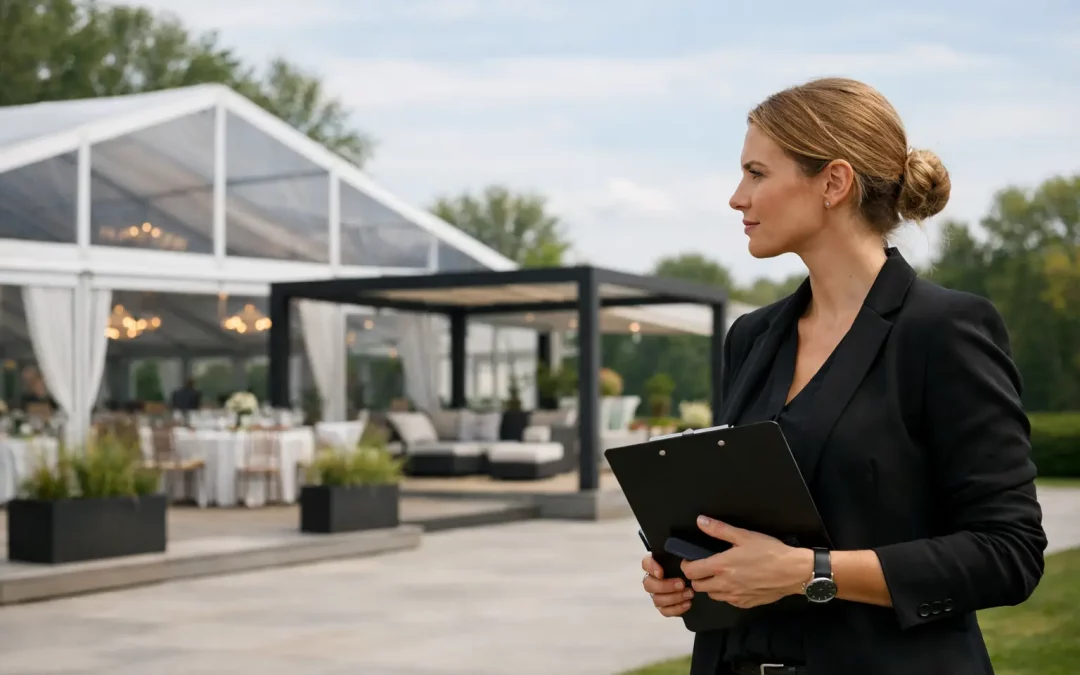
When a hospitality build works well, most guests never think about the structure at all. They notice the welcome, the comfort, the view, the food service and how easily the day flows. That is exactly why a practical guide to temporary hospitality structures matters – because the quality of the environment depends on planning decisions made long before the first guest arrives.
For event organisers, venue teams and production managers, temporary hospitality is rarely just a marquee on a field. It is often a live operational space with catering, branding, power, heating or cooling, toilets, service routes, emergency access and public-facing expectations all running at once. The structure is the framework, but the real job is making the whole site function under pressure.
What temporary hospitality structures need to do
A hospitality structure has to meet two standards at the same time. It needs to look right for the event and perform properly as a working venue. That means weather protection, a comfortable internal environment, safe circulation, reliable services and a layout that suits both guests and staff.
This is where many projects become more complex than they appear on paper. A reception marquee for a corporate event has different demands from a VIP enclosure at a showground, a dining structure at a sporting event or a hospitality village at a city-centre activation. Capacity matters, but so do dwell time, catering style, peak arrival patterns, furniture density and how guests move between spaces.
If the event includes sponsors, premium ticket holders or broadcast visibility, the standard rises again. Finishes, sightlines and branding all become more critical. At that point, the question is not simply how much covered space you need. It is how the structure supports the event’s commercial and operational goals.
A guide to temporary hospitality structures starts with the site
Site conditions shape nearly every major decision. Ground type, gradient, access width, vehicle movement, drainage, nearby buildings and exposure to wind all affect what can be built and how efficiently it can be delivered.
A flat, open site with good hardstanding gives you options. A rural showground after wet weather does not. Nor does a heritage venue with protected surfaces, limited access hours and tight rules on anchoring. In those cases, build methodology matters as much as the structure specification. Ground protection, plant strategy, ballast requirements and phased delivery all need to be considered early.
Access is often underestimated. It is not enough for a structure to fit the site. The site must also allow lorries, plant, crew and supporting infrastructure to get in, unload, build safely and leave without disrupting the wider event programme. If access is constrained, timings and sequencing need much tighter control.
For large-scale projects, it helps to think beyond the hospitality footprint itself. Ask where deliveries will arrive, where catering waste will go, how toilets will be serviced, where generators can sit without affecting guest experience, and how emergency routes stay protected throughout the event.
Layouts that work in real conditions
Good hospitality layouts are rarely driven by floor area alone. They are driven by use. A drinks reception needs different circulation from a seated lunch. A premium enclosure for all-day attendance needs a different balance of seating, standing room and service space than a short-duration hospitality suite.
Front-of-house and back-of-house should be planned together. This is a common fault line in temporary builds. A room can look excellent in a visual plan, but if waiting staff have no clear route, if the bar is undersized, or if the catering tent sits too far from service points, the guest experience suffers very quickly.
Entrance position is another detail that affects the whole event. It shapes arrival flow, queuing, ticket checking, cloakroom placement and the first visual impression. Inside the structure, furniture density needs to be realistic. Overfilling a hospitality space may lift headline capacity, but it often makes service slower and the room less comfortable.
The strongest layouts also account for weather behaviour. In Scotland and the north of England, guests will naturally cluster away from exposed entrances, seek warmer zones in colder months and avoid dead-end areas if circulation feels tight. Heating, ventilation and door positioning all influence how the space actually gets used.
Services are not an add-on
Temporary hospitality only performs as well as its supporting infrastructure. Power, lighting, heating, cooling, flooring and sanitation are not secondary items to be added late in the planning process. They determine whether the space feels premium and whether operations run properly.
Power planning should be based on actual load, not assumptions. Catering equipment, bars, AV, feature lighting, refrigeration, toilets and production requirements can quickly build into a substantial demand. If the event is live, branded and guest-facing, resilience matters too. The cost of under-specifying power is usually paid for on event day.
Lighting needs similar care. Daytime events still need internal lighting for mood, service points and weather shifts. Evening events need a clear hierarchy between practical lighting and atmosphere. Guests must be able to move safely, staff must be able to work efficiently and the environment still needs to feel considered rather than purely functional.
Flooring is another operational decision disguised as a finish. On uneven or soft ground, the right floor system improves safety, accessibility and comfort in one move. It also protects the event from weather variation. A hospitality suite that looks polished in dry conditions but becomes difficult underfoot after rain is not properly planned.
Compliance and build management
Any serious guide to temporary hospitality structures has to deal plainly with compliance. For professional organisers, this is not paperwork for its own sake. It is part of responsible delivery.
Temporary structures need to be designed, installed and signed off correctly, with appropriate consideration for wind loading, anchoring or ballast, fire safety, occupancy, emergency egress and the interface with the wider event plan. Depending on the project, you may also need detailed RAMS, structural calculations, fire documentation, site-specific build plans and coordination with local authority or venue stakeholders.
What matters in practice is clarity. Who is responsible for each part of the build? How are changes managed once installation begins? What happens if site conditions differ from the original survey? The best projects run with clear lines of communication between organiser, structure provider, production, catering and venue teams.
This is where experienced project-led suppliers add real value. A large temporary hospitality build is not only about supplying stock. It is about managing programme pressure, site realities and operational coordination without creating risk elsewhere on site.
Balancing guest experience with operational reality
There is always a trade-off to manage between ambition and practicality. A fully glazed frontage may offer an impressive outlook, but it can change temperature control and increase service complexity. A remote premium pavilion may create exclusivity, but it may also stretch utilities and staffing. A larger footprint can improve comfort, though it also increases budget, build time and site impact.
That does not mean scaling back by default. It means making decisions with the full picture in mind. The most effective hospitality environments are usually those where aesthetics, operations and site logistics have been resolved together rather than in sequence.
For example, if branding is central to the event, allow proper time for banner locations, walling choices and installation access. If catering is a major part of the offer, size prep and service areas properly from the outset. If the audience includes senior guests or premium clients, consider acoustics, toilet proximity, floor stability and weather resilience with the same seriousness as visual finish.
Purvis Marquee Hire works in exactly these conditions – projects where the structure itself is only one part of a much wider delivery challenge.
When to start planning
Earlier is almost always better, especially for summer event dates, agricultural show season and premium corporate calendars. Early planning improves stock availability, gives more room for site visits and allows practical issues to be solved before they become expensive.
It also helps with phasing. Some sites need hospitality built around other event infrastructure. Others need protected routes for venue operations or public access while installation is underway. The sooner those dependencies are mapped, the less disruption you face later.
Late changes do happen. Guest numbers shift, sponsors request additional branding, or the site programme moves. That is normal in live events. The aim is not to remove all change but to work with a structure plan that can adapt without undermining safety, comfort or delivery.
Choosing the right structure partner
The right partner should understand far more than clearspan widths and roof profiles. They should be able to talk confidently about access, sequencing, welfare, utilities, public interface, back-of-house function and how hospitality spaces operate during live event conditions.
Ask practical questions. Who manages the build on site? How is weather risk handled? What is included in the design and planning stage? Can the supplier support fencing, toilets, generators, lighting, flooring and site protection as part of one coordinated package? For larger events, that joined-up approach can remove a great deal of pressure from the organiser.
A temporary hospitality structure should not feel temporary in use. It should feel considered, reliable and ready for the demands placed on it. If the planning is right, the build quality is right and the operational details are handled properly, guests simply enjoy the event – which is usually the clearest sign the job has been done well.
The smartest starting point is not asking what structure looks best. It is asking what your event needs to achieve on site, in weather, under schedule pressure, with real people using it all day.