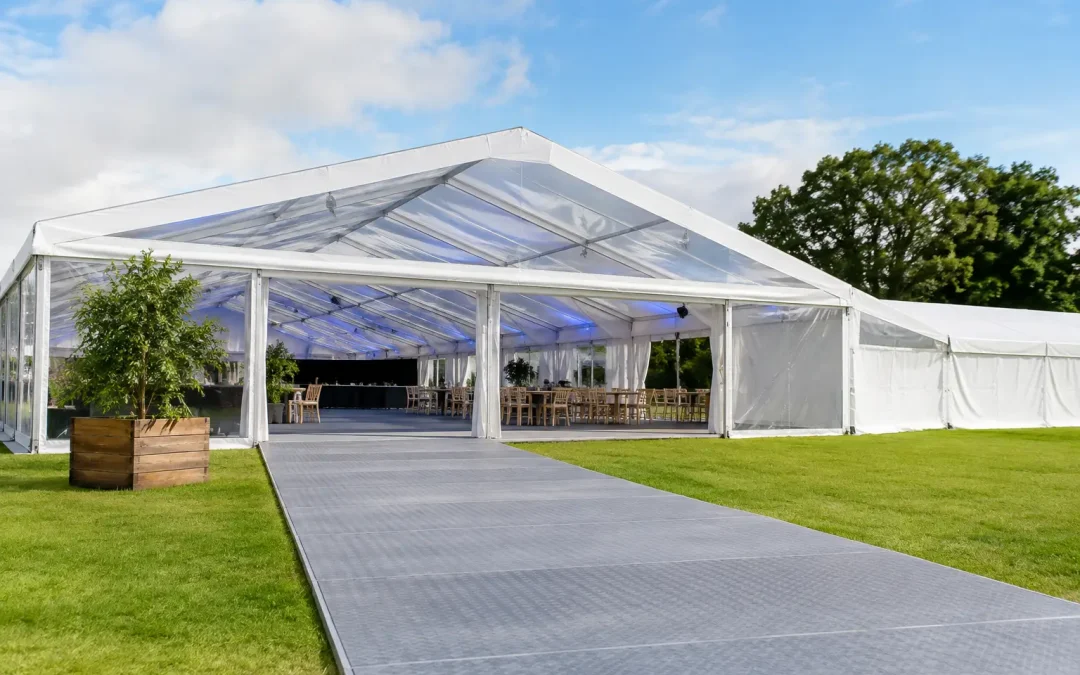
A temporary roadways review should happen before the first production lorry reaches site, not when vehicles are already queuing at a wet gate. For large events, roadways are not simply a way of keeping tyres out of the mud. They support build schedules, protect the venue, separate vehicle and pedestrian movement, and keep essential services operating when ground conditions are under pressure.
For organisers managing public events, agricultural shows, festivals, hospitality builds or broadcast compounds, the right temporary access solution is determined by the site plan and the operational reality behind it. Ground protection that works well for a lightweight catering van may be wholly unsuitable for articulated lorries, cranes, telehandlers and repeated traffic over several weeks.
What a temporary roadways review should assess
A useful review starts with the purpose of every route. It is tempting to treat the site as one large access problem, but construction access, guest arrival routes, emergency access and back-of-house servicing all make different demands on the ground and on the layout.
The first consideration is the existing surface. Firm, level grass may need a different system from saturated pasture, sloping parkland, gravel tracks or a historic estate lawn. Soil type, drainage, recent rainfall and the likelihood of further vehicle movements all matter. A route can appear acceptable during a dry site visit, then deteriorate quickly once repeated axle loads begin to work the surface.
Loading is equally critical. The review should identify vehicle types, gross weights, axle loads and how often each vehicle will use the route. A single delivery vehicle is one thing; a continuous programme of installation lorries, plant, waste collection vehicles and supplier vans is another. Turning points, reversing areas and unloading bays receive particularly high stress and usually need more attention than a straightforward access run.
Timing changes the specification too. If the roadway is required for a short build on dry ground, a lighter-duty approach may be appropriate. If it must remain in place through a two-week event programme, with weather exposure and daily resupply, the route needs to be planned for sustained use rather than the best-case forecast.
Temporary roadways review: access before arrival
The strongest temporary roadways review is tied directly to the traffic management plan. It maps who needs to travel where, at what time, and whether they need to cross public-facing areas. This avoids a common issue on busy sites: a route that is physically possible but operationally impractical once marquees, fencing, toilets, generators and event infrastructure are in place.
Build and breakdown phases deserve their own plans. During construction, wide plant access may be needed around the perimeter of a marquee or across open ground. Once the event opens, that same route may need to become a protected pedestrian zone, a discrete service lane or an emergency-only corridor. Installing roadways without considering those changing phases can create unnecessary rework, delays and compromised guest circulation.
Emergency access must remain clear and dependable. A route that is acceptable for a small vehicle may not accommodate an appliance, ambulance or recovery vehicle. Width, load-bearing capacity, gateways, gradients and turning circles need to be considered with the relevant site stakeholders. There must also be a practical method for keeping that route free from parked vehicles, stock, temporary structures and queues.
Choosing the right system for the job
There is no single best temporary roadway. The right product depends on load, terrain, duration, environmental requirements and the finish expected by the client or venue. Heavy-duty panels can provide the stability needed for plant and lorries, while lighter ground protection may suit pedestrian routes, hospitality areas or low-traffic service access.
The important distinction is between a surface that looks tidy and one that is designed for the work being asked of it. A visually neat matting route can still move, spread or rut at the edges if the sub-base is weak, the panels are not suited to the loading, or vehicles are turning sharply across it. On a premium event site, poor performance can damage both the ground and the event timetable.
Installation detail matters. Panels need appropriate connections, edge management and transitions where they meet existing hardstanding, roads or entrances. Uneven joints can create trip points, restrict wheeled access and become more pronounced under traffic. Where pedestrian and vehicle activity overlap, the route should be controlled through barriers, signage, stewarding and sensible site layout rather than relying on drivers and guests to negotiate the space themselves.
Protecting the site without restricting delivery
Venue protection is often a central reason for installing temporary roadways, particularly on grassland, parkland and sports grounds. However, protection is not only about avoiding visible tyre marks. Compaction can affect drainage and ground recovery long after an event has finished, while damaged verges and gateways can create further maintenance work for the landowner.
This is where early discussion with the venue team pays off. Identify protected areas, underground services, drainage runs, tree root protection zones and any surfaces that cannot take vehicle traffic. Agree where vehicles can wait, turn and unload. A carefully planned holding area may prevent dozens of vehicles from cutting corners or parking on vulnerable ground during the busiest part of the build.
Weather contingency should be built into the plan rather than treated as an exception. In Scotland and the north of England, rain, wind and changing ground conditions are part of normal event delivery. The route that works on day one may need extending or reinforcing as the build develops. Keeping suitable materials, plant and crew capacity available for responsive changes gives the organiser more control when conditions move against the programme.
Coordination with the wider event build
Temporary roadways work best when designed alongside the whole infrastructure package. The access route affects where a marquee can be built, how flooring materials are delivered, where generators sit, how fencing lines are installed and whether welfare units can be serviced safely. It also affects the order of operations.
For example, a main access route may need to be laid before heavy marquee components arrive, but sections may need to be removed or adapted later to allow final landscaping, branding or guest-facing finishes. If the roadways team, structure crew, production manager and venue representative are working from different plans, those handovers become harder than they need to be.
At Purvis Marquee Hire, we approach access as part of the delivery plan, not an isolated hire item. That means considering the route from the road entrance to the final working area, the vehicle movements needed throughout the programme, and the practical steps required to leave the site in good order afterwards.
Questions to resolve before confirming a roadway plan
Before sign-off, organisers should be able to answer a few operational questions clearly. Which vehicles will use each route, and at what frequency? What happens if rain changes the ground condition during build? Where do drivers wait if their delivery slot is delayed? How will emergency access be maintained at all times? Who is responsible for daily inspections and reporting any movement, damage or standing water?
It is also worth agreeing the removal plan early. Roadway uplift needs to fit around final event operations, waste removal, structure breakdown and venue handback. Taking up panels too soon can strand essential vehicles; leaving them too late can delay restoration works. The best approach protects the programme at both ends of the event.
A well-planned roadway is rarely the most visible part of an event, but it often determines whether the rest of the site can function as intended. Give it the same attention as the marquee footprint and build schedule, and the team will have firmer ground beneath every deadline.