Rigging rarely causes problems because a crew cannot complete the work. It causes problems when it is programmed after ceiling access has closed, when a lighting plot changes after calculations are signed off, or when a crucial lift shares a loading bay with every other supplier. Knowing how to schedule event rigging means treating it as a critical part of the build programme, not a technical add-on to be fitted into a spare hour.
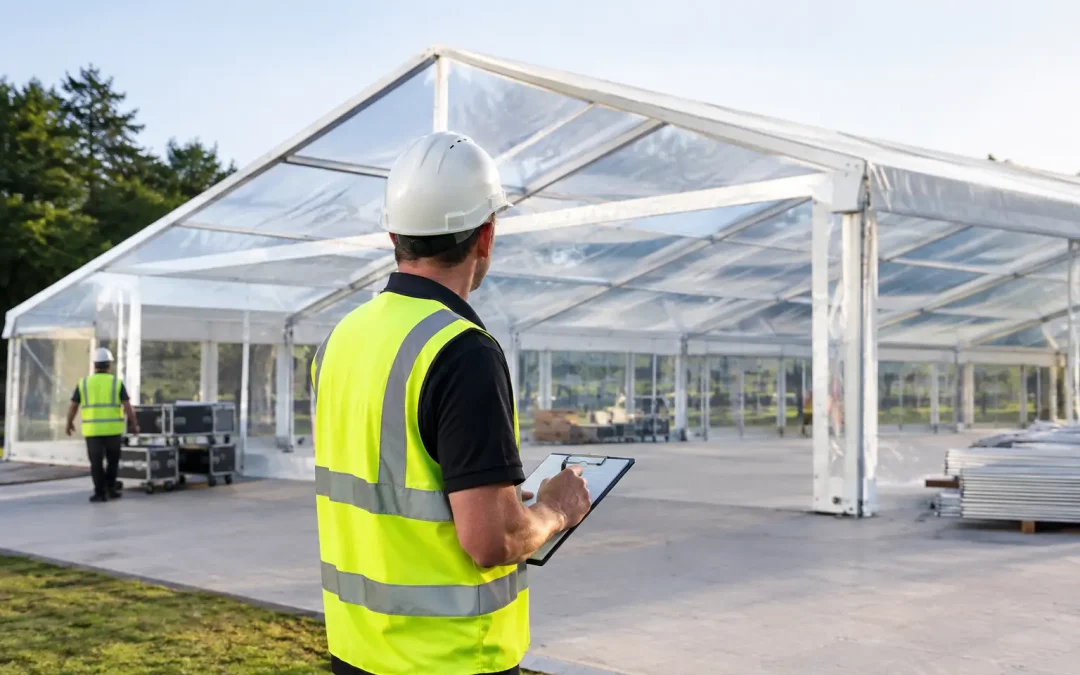
For major temporary events, rigging can affect the marquee design, production schedule, floorplan, power distribution and guest access. The right programme creates time for approvals, safe working at height, coordinated lifting and testing. It also gives every contractor a clear handover point before the event moves from construction into live operation.
Start with the rigging brief, not the equipment list
A workable schedule begins with a confirmed brief. Establish what is being supported, where it will sit, how much it weighs and who owns each element. Decorative features, stage lighting, PA arrays, LED screens, signage, projection, drapes and scenic pieces may all require a rigging solution, but they do not carry the same loads or demand the same access.
Ask production teams for current drawings, equipment weights and fixing requirements early. A CAD layout should show the structure, rigging points, stage position, emergency routes, service corridors and working areas. If a temporary structure is involved, the structural provider must be involved before point loads are assumed. A marquee roof can accommodate carefully designed loads, but it is not a substitute for a venue grid, and any proposed suspension arrangement needs engineering approval.
At this stage, separate confirmed items from provisional ones. A lighting package may be confirmed while a client is still deciding on an LED screen. Programme the known work, but set a firm design-freeze date for changes that affect loads, point locations or access plant. Late additions are sometimes possible, but they may require revised calculations, different lifting equipment or a change to the sequence of works.
Build the event rigging schedule around dependencies
Rigging has dependencies on both sides of the programme. It cannot begin until the structure or venue is released, the rigging design is approved and the required access equipment is available. Other work cannot safely begin beneath it until lifting, installation and inspection are complete.
For most builds, the logical sequence is: structural handover; grid or point installation; primary rigging; lifting of trusses, lighting, audio or scenic elements; secondary rigging and cable management; inspection and sign-off; then focused production work beneath the completed overhead installation. The exact order changes with the site. In a busy arena, a pre-rig may be possible before the main build. On an outdoor event field, the marquee itself may need to be fully tensioned and checked before approved rigging work starts.
Allow realistic durations rather than copying timings from a previous show. The same lighting rig can take very different periods depending on roof height, number of points, ground conditions, weather exposure, lorry access and whether work is taking place alongside steel, flooring or furniture installation. Include set-up and removal time for cherry pickers, scissor lifts, chain hoists and exclusion zones, not just the time spent in the air.
A useful programme identifies three protected milestones: structural release for rigging, completion of overhead lifting and final technical sign-off. Once the final milestone is achieved, the area below should only reopen to planned trades. This avoids a familiar problem: a finished rig is repeatedly disturbed by contractors trying to finish work underneath it.
Allow time for approvals and documentation
The rigging plan should be reviewed before crews arrive on site. Depending on the project, this may include structural calculations, point-load schedules, lifting plans, rescue arrangements, risk assessments, method statements, equipment certification and records of competent personnel. Venue rules, local authority requirements, insurer conditions and client standards can all add their own approval process.
The programme should show when these documents are due, who reviews them and what happens if information changes. Scheduling an approval meeting the day before installation is not a contingency plan. If the reviewer raises a legitimate concern about load paths or working access, the team needs enough time to resolve it without forcing an unsafe decision on site.
For public events, consider the wider construction management duties as well. Rigging contractors need to understand site rules, welfare arrangements, emergency procedures, vehicle routes and the activities of adjacent contractors. A well-run site induction is not paperwork for paperwork’s sake. It prevents crews discovering too late that they cannot move plant through a pedestrian route or work overhead during a scheduled delivery period.
Plan access, lifts and exclusion zones as one operation
The access plan is often the difference between a realistic rigging schedule and an optimistic one. Confirm which gate a crew will use, the route from the gate to the work area, vehicle height limits, ground-bearing capacity and the available turning space for lorries and access plant. On grass or uneven terrain, ground protection may be needed before a machine can safely travel or operate.
Then look above as well as below. Roof obstructions, services, venue beams, open-sided marquee elevations and temporary infrastructure can all limit where equipment can be positioned. In compact city-centre sites, access equipment may need to arrive before flooring, furniture and internal partitions close off routes. At agricultural shows and festivals, the issue may be soft ground after rain or competing deliveries on narrow service roads.
Protect the lifting window with an exclusion zone. This should be large enough for the task and clearly communicated to every contractor working nearby. Do not programme rigging above people carrying out build work simply because both activities are shown on the same day. Parallel working can save time, but only where task boundaries, overhead protection and supervision make it safe.
Weather also deserves a place in the schedule for exposed sites. Wind can restrict lifting operations and work at height, while heavy rain may affect ground conditions and access. Build in weather tolerance where the programme allows, particularly for large-scale temporary structures with substantial production requirements.
Coordinate the people who need the roof space
Event rigging sits between several disciplines. The production manager needs a completed grid for lighting and sound. The structure team needs to protect the integrity of the building. Power contractors need routes for distribution, and the event manager needs a safe route to a venue that is opening on time.
A short daily coordination meeting during the critical build period keeps these requirements aligned. Review planned lifts, vehicle movements, changes to equipment weights, areas being released, work at height and any restrictions for the next shift. The purpose is not to add meetings. It is to make decisions while changes are still manageable.
Make one person responsible for controlling changes to the rigging plan. If the production designer requests an additional scenic piece, the request should not go straight to a crew member on the floor. It needs to be assessed against the approved design, available capacity, access method and programme. Clear change control protects the client as much as the supplier, because it records what has been requested, approved and delivered.
How to schedule event rigging through rehearsals and show days
The rigging schedule should not end at installation. Leave time for the production team to focus, programme and test equipment once it is in position. Audio systems may require tuning, lighting needs addressing and testing, while screens and show-control equipment need signal checks. If a problem is discovered during testing, access to the rig may be required again.
Programme a final inspection after significant changes, especially if equipment has been added, moved or reconfigured. Agree who holds the inspection record and who has authority to permit further work at height. Once doors open, access should be controlled tightly. Any adjustment above guests, exhibitors or crew areas needs a clear operational decision, not an improvised response.
The de-rig deserves equal attention. Schedule it after the audience has cleared and allow for the safe removal of suspended equipment before the structure, flooring or power system is dismantled. Rushing the final night is a poor trade for a build that has been carefully managed for days.
For complex events, the most reliable rigging programme is built into the wider infrastructure plan from the first site meeting. Purvis Marquee Hire approaches that coordination as part of the delivery job: understanding the structure, site routes, production demands and working sequence together. Give the rigging team timely information and protected access, and they can give the rest of the build something every event needs – a safe, signed-off overhead environment that is ready for the show.