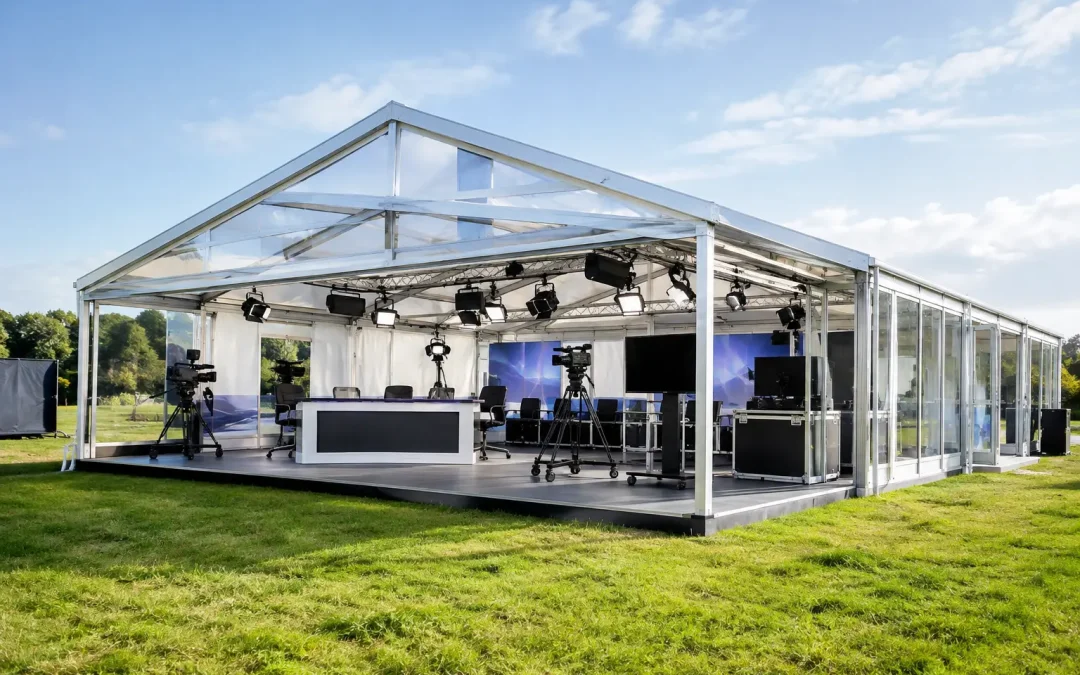
A broadcast compound example is most useful when it shows more than a row of outside broadcast vehicles. At a major event, the compound is a working operational base where broadcasters, production teams, technical suppliers and event management need to function together under fixed transmission times. The vehicle positions matter, but so do power resilience, cable protection, crew welfare, vehicle movements, safe access and the ability to keep working when weather changes.
For an agricultural show, city-centre activation, televised sporting fixture or large festival, a compound should be planned as part of the event site from the outset. Trying to fit it into leftover space late in the programme usually creates compromised access, long cable runs and avoidable pressure during the build.
A broadcast compound example for a live outdoor event
Consider a three-day agricultural event with live television coverage, recorded interviews and scheduled online streaming. The site is a working showground with grass parking areas, public thoroughfares, livestock operations and hospitality marquees. Broadcasters require an OB unit, satellite or communications vehicles, production offices, technical work areas, crew catering and a controlled route for camera and fibre links to the main arena.
The compound is positioned on firm ground at the edge of the event footprint, close enough to the arena to keep camera runs practical but separated from public circulation. It has a dedicated vehicle entrance, turning space for articulated lorries and a secure pedestrian gate for accredited crew. This location also gives the production team a clear route to the arena without crossing busy visitor areas.
A temporary structure beside the OB unit provides production offices, meeting space and a protected area for technical staff. Depending on the broadcaster’s specification, it may house edit positions, engineering benches, comms equipment or equipment cases that cannot be left exposed. A second marquee can provide a welfare and catering base, keeping crew away from the noise and congestion of the vehicle line.
This is not simply a case of putting up a marquee next to a lorry. The structure needs the right flooring, lighting, heating or cooling, cable entries, emergency exits and internal layout to support long production days. It must also be installed without blocking doors, ventilation points, generator access or satellite sightlines.
The operational components behind the compound
A reliable compound brings several workstreams into one managed area. Each needs to be considered against the broadcaster’s requirements, the event schedule and the realities of the site.
Vehicle access and working space
OB units and support vehicles are substantial, often arriving on a tight schedule among other event suppliers. The route must be checked for width, turning radii, overhead restrictions, gateways, ground condition and conflicts with public-facing build activity. A route that looks suitable on a site plan may be impractical after rain or once fencing, catering units and trade stands are in place.
Within the compound, vehicles need enough spacing for doors, cable deployment, generator connections and emergency access. The layout should also allow a vehicle to leave if required without trapping the rest of the operation. Where ground is soft, uneven or exposed, ground protection and appropriate levelling are operational necessities rather than finishing touches.
Power and distribution
Broadcast operations have a low tolerance for interruption. Production equipment, comms, lighting, office facilities and welfare areas may all require different supplies, with critical systems separated from general use where the technical plan calls for it.
A properly designed temporary power system considers load calculations, distribution boards, cable routes, protection from vehicle traffic and standby arrangements. Generator placement matters too. It must be accessible for refuelling and service, located with noise and exhaust in mind, and kept clear of public areas and air intakes. Running one undersized generator because the compound is only temporary is a false economy when a live programme is on air.
Cable management and routes to the venue
The compound only works if it connects cleanly to cameras, presentation areas and transmission points. Cable routes should be agreed early with the production manager, venue and event safety team. They may cross service roads, public paths, temporary flooring or areas shared with other contractors.
Where cables cross vehicle or pedestrian routes, suitable ramps, barriers and signing are required. The route must remain inspectable throughout the event, particularly where rain, mud or high footfall can affect cable covers and trip risk. It is also worth planning spare capacity. A late request for an additional camera position should not mean improvising an unsafe route through a public area.
Welfare, security and crew movement
A production crew can be on site from before dawn until late evening. Toilet units, wash facilities, rest areas and catering space should be close enough to be useful without interfering with technical activity. Welfare planning has a direct effect on how well the compound runs, particularly during multi-day events or adverse weather.
Security is equally practical. The compound may contain high-value technical equipment, confidential production activity and live transmission infrastructure. Perimeter fencing, controlled access and suitable lighting help the team work without unnecessary interruption. Crew members still need to move quickly between the compound and filming positions, so the secure boundary should support operations rather than create a bottleneck.
Why temporary structures are often the sensible choice
Many venues do not have permanent rooms in the right place, with the right capacity, for a broadcast team. A temporary structure gives the production operation a controllable footprint close to the technical vehicles. It can be configured for offices, briefing space, green rooms, equipment handling, catering or a mixed-use setup.
The right specification depends on the event. A one-day outside broadcast may need a compact office and welfare unit, while a high-profile televised event may require several linked spaces with branded front-of-house areas and separate back-of-house access. In exposed locations, solid flooring, sealed sidewalls, heating and appropriate ballast or anchoring can make the difference between a usable work base and a difficult one.
Temporary structures also give organisers flexibility. They can be removed once the event closes, avoiding permanent alterations to a historic venue, parkland site or working showground. However, temporary does not mean informal. Fire exits, emergency lighting, accessibility, occupancy, electrical certification and structural documentation all need to be addressed in the wider event plan.
Planning the compound before the build starts
The strongest broadcast compounds are settled through early coordination. A site visit should bring together the event organiser, broadcaster or production manager, infrastructure provider, power supplier and any venue representative responsible for access or ground conditions. That discussion should cover arrival times, vehicle dimensions, site restrictions, transmission requirements, security, emergency procedures and dismantling priorities.
It is also sensible to agree who controls changes once the build is under way. Broadcast requirements can move quickly, but changes to structure position, power demand or cable routing affect several suppliers. A clear on-site point of contact prevents a small adjustment becoming a safety issue or delay.
At Purvis Marquee Hire, this coordination is treated as part of the delivery, not an administrative extra. The structure, flooring, temporary power interfaces, access requirements and operational layout need to work as one site solution.
Where a compound plan can fall short
The most common issue is allocating the compound too late. It then ends up on poor ground, behind visitor parking or at the far end of a venue, creating lengthy cable runs and frustrating crew movement. Another regular problem is overlooking the build sequence. A compound may be correctly positioned on paper but inaccessible once other contractors have installed fencing, stands or temporary roads.
Weather is another variable. A dry grass area at the planning stage can become unsuitable after sustained rain, especially where heavy broadcast vehicles need to arrive and remain stationary. Allowing for ground protection, alternative access and drainage from the beginning provides options when conditions change.
There is a balance to strike. The compound should be close to the action, but it should not compromise audience space, emergency routes, livestock movement, residential neighbours or the visual presentation of a premium event. Good planning resolves those competing demands before crews arrive.
A well-run compound is rarely noticed by the audience, which is exactly the point. When the programme goes live, the crew should have safe access, dependable services and a dry, organised place to work – leaving the event team free to focus on the show itself.