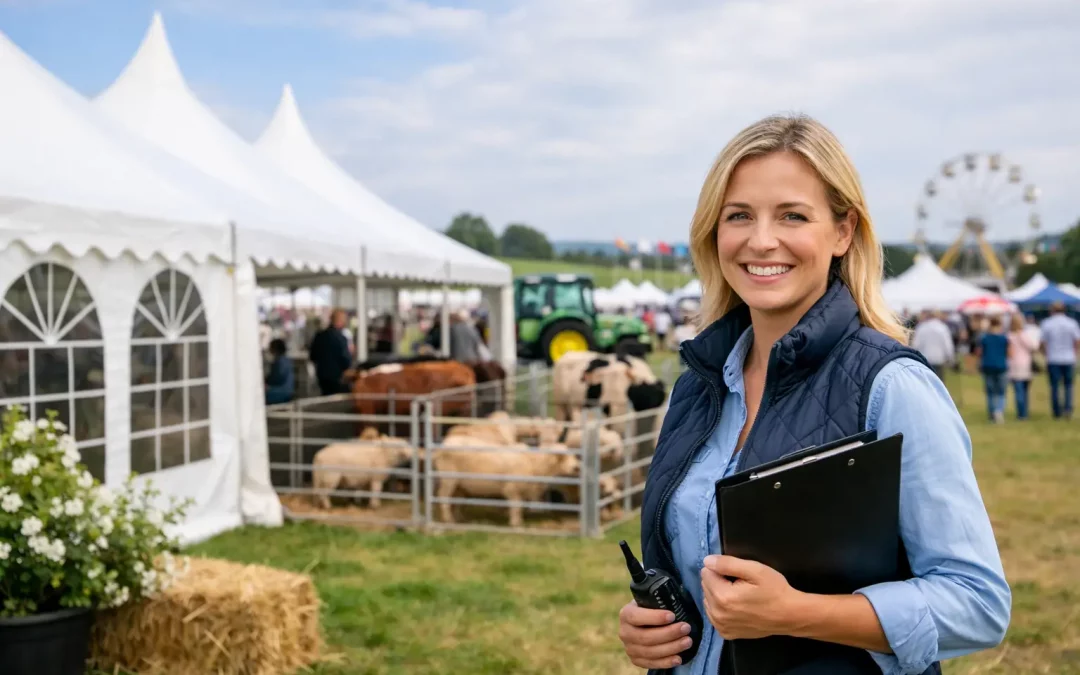
A showground can look straightforward on a site plan, right up until the first artic arrives, the rain turns a service route soft, and three stakeholders ask for layout changes before lunch. That is why agricultural show marquee hire is rarely just about putting up a structure. For organisers, it is about keeping a live site moving safely, protecting the visitor experience, and making sure every operational area works under pressure.
Agricultural shows ask more of temporary infrastructure than many events. They combine public attendance, livestock, trade stands, machinery, catering, hospitality, judging rings, welfare areas and service traffic, often spread across large rural sites with mixed ground conditions. The marquee package has to do more than look the part. It has to support how the event actually runs.
What agricultural show marquee hire needs to cover
At a well-run show, front-of-house and back-of-house are tightly linked. A members’ enclosure may sit close to a public route. A sponsors’ hospitality space may need power, flooring, branding and catering support delivered to a very specific timetable. Trade exhibitor areas might require weather protection without blocking sightlines or vehicle access. None of those requirements sits in isolation.
This is where experienced agricultural show marquee hire becomes valuable. The structure itself matters, of course, but so do the details around it – build sequencing, ground protection, ingress and egress, emergency routes, technical services and the practical realities of working on a rural site. A marquee supplier should be planning those details from the outset, not improvising them during build week.
For show organisers, the real question is not simply how much covered space is required. It is how each structure supports audience flow, operational access and compliance. A livestock marquee has different demands from a hospitality suite. A craft tent has different needs from a production office or organisers’ HQ. Good planning starts by treating each area as part of one working event environment.
Planning for site conditions, not just square metreage
Agricultural shows are often exposed, busy and unforgiving. Ground conditions can vary sharply across the same field, especially after periods of wet weather. Access routes may be limited, and vehicle movements often have to be coordinated around existing farm use, early exhibitor arrivals or sensitive ground.
That affects every part of the build. Marquee size and profile matter, but so does where plant can travel, where materials can be offloaded, and whether the surface can take repeated lorry movements without degrading. Flooring choices also depend on use. Public footfall, hospitality standards, livestock traffic and equipment loads all place different demands on the sub-surface and finished floor.
It is tempting to treat weather as a late-stage concern, but for agricultural shows it needs to be factored in early. Wind loading, rainwater management, heating or cooling, and the way people transition between open ground and covered areas all influence the specification. If a structure is meant to deliver a premium hospitality experience, that standard has to hold up when the weather turns, not only when the sun is out.
Why layout design matters as much as the marquee itself
A common mistake in show planning is to think of marquees as separate bookings rather than as part of the site layout strategy. In practice, structure placement influences queues, servicing, pedestrian routes, visibility for exhibitors and how easily the public can move between key attractions.
A good layout reduces friction. It allows catering teams to replenish stock without crossing public areas unnecessarily. It gives stewards clear sightlines. It creates sensible transitions between admissions, retail, hospitality and welfare spaces. It also leaves enough room for plant, maintenance access and emergency response, all without making the site feel over-engineered.
For larger shows, this often means balancing public presentation with operational discipline. A marquee line-up may need to look clean and coherent from the visitor side while still allowing service access behind. Equally, VIP and sponsor areas need to feel polished without creating bottlenecks at peak times. This is where practical event infrastructure planning earns its keep.
Safety, compliance and documentation are not side issues
Agricultural shows involve multiple contractors, public attendance and a broad range of operational risks. Temporary structures sit within a wider safety framework that includes traffic management, fire planning, crowd movement, electrical systems and welfare provision. The marquee contractor needs to understand that context and supply the right documentation in a way that supports the organiser’s wider event planning.
That includes structural certification, method statements, risk assessments and clear build schedules. It also includes coordination with other suppliers on site. If power distribution, fencing, toilets, lighting and branding all interact with the marquee footprint, those interfaces need to be managed properly.
For event teams, this is often where the difference between a basic hire company and a delivery partner becomes clear. If the only conversation is about dimensions and dates, gaps tend to emerge later. If the conversation starts with site constraints, public safety, build access and event operations, the end result is usually more dependable.
Agricultural show marquee hire for different event zones
Not every show structure should be specified the same way. Public exhibition areas often prioritise capacity, weather cover and straightforward visitor movement. Hospitality spaces tend to demand higher-spec flooring, linings, power, lighting and temperature control. Administrative areas may need practical working layouts with secure access, communications provision and space for event control functions.
Livestock and rural trade environments bring their own considerations. Ventilation, cleaning practicality, separation distances and safe circulation all matter. Machinery display areas can require large clear spans and careful thought around loading, delivery timing and public interface. Food and beverage zones need enough infrastructure behind the scenes to operate efficiently throughout the day.
The best agricultural show marquee hire is flexible enough to support all of those uses while still feeling like one joined-up event. That usually means combining structures, ancillary equipment and site services into a coherent package rather than hiring each element in isolation.
Build programmes need realism
Showground builds rarely happen in a vacuum. Other contractors may already be on site. Exhibitors arrive early. Groundworks can overrun. Weather can affect access. Last-minute additions are common, especially around sponsors, catering and public facilities. A realistic programme accounts for those pressures instead of pretending they will not happen.
This is one reason larger agricultural events benefit from suppliers with strong stock capacity and on-site management experience. The build is not just a transport exercise. It needs sequencing, supervision and enough flexibility to respond when the plan shifts. Calm delivery matters. So does having crews and systems that can keep quality high while the site gets busy.
For organisers, it is worth asking not only when a supplier can install, but how they manage change, what site information they need in advance, and how they coordinate with the wider event team. Those answers usually tell you more than a brochure ever will.
Choosing a supplier for agricultural show marquee hire
Price will always be part of the discussion, but it should not be the only one. A lower quote can become expensive if it overlooks access needs, under-specifies flooring, or leaves key infrastructure to be solved later. Equally, over-specifying every area is not always sensible. The right answer depends on visitor numbers, event ambition, site exposure and how each zone will be used.
A capable supplier should ask detailed questions early. They should want to understand the showground, the traffic plan, the programme, the service requirements and the standards expected in each area. They should also be comfortable discussing the awkward bits – soft ground, tight access windows, utility runs, mixed-use zones and contingency planning.
For complex events across Scotland and the north of England, that practical mindset is often what separates dependable delivery from avoidable stress. Companies such as Purvis Marquee Hire work in exactly those conditions, where a marquee is only one part of a much larger operational picture.
The value of getting it right
When marquee infrastructure is planned properly, visitors may not notice the effort behind it. They simply experience a show that feels clear, safe and well organised. Exhibitors can trade. Hospitality guests are comfortable. Staff can do their jobs. Vehicles move where they should, and the site holds together when the weather is less than helpful.
That is the real measure of agricultural show marquee hire. Not whether a structure looked good in isolation, but whether the whole temporary environment performed on the day. For event organisers carrying responsibility for public safety, stakeholder expectations and hard deadlines, that kind of reliability is what matters most.
If you are planning an agricultural show, start with the site realities, not the brochure images. The right marquee solution is the one that works for your ground, your timetable and the way your event actually runs.