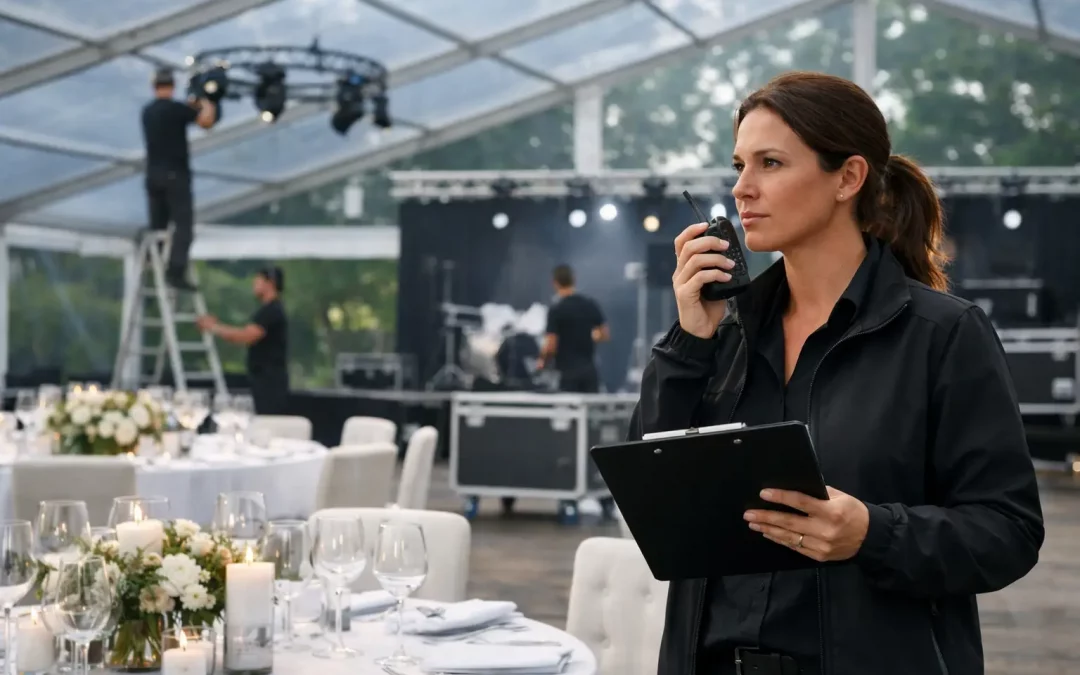
If your first site vehicle is held at the gate, the ground is softer than the survey suggested, and three departments arrive asking for changes before the frame is even up, you find out very quickly whether onsite event build management is just a line in a proposal or a real delivery function. On a live event site, the difference matters.
For large marquees and temporary structures, the build phase is where planning meets friction. Drawings are tested against actual access. Timelines are tested against weather, traffic and late approvals. Suppliers who looked well coordinated in pre-production can start competing for space, power and attention. Good onsite event build management keeps that pressure from spreading across the project.
What onsite event build management actually covers
At its best, onsite event build management is not just supervising a crew and ticking off deliveries. It is the active coordination of people, plant, materials, safety controls and site sequencing so a temporary structure can be built properly, handed over on time and operated with confidence.
That usually starts before the first lorry moves. Build managers need a working understanding of the site layout, access routes, ground conditions, local restrictions, install programme, welfare arrangements, traffic movement, and how other contractors will interact with the structure build. On a straightforward greenfield site, that may be manageable with a clean sequence and decent space. In a city-centre location, heritage setting, stadium concourse or working estate, the complexity rises quickly.
The role also sits between strategic planning and physical delivery. A build manager has to read the paperwork, but also spot what the paperwork missed. That might be a turning circle that is too tight for articulated vehicles, a service trench that changes anchor positions, or an event overlay plan that looks sensible until catering, fencing and generators all want the same footprint.
Why build management matters more on complex sites
Large events rarely fail because one thing went dramatically wrong. More often, they come under strain because several smaller issues were not controlled early enough. Access windows slip. A subcontractor sets up in the wrong order. Plant sits idle because the area is not ready. A structure goes in, but the flooring, power run or branding install has not been coordinated around it.
That is where strong onsite event build management earns its value. It protects the build sequence, keeps communication practical, and makes sure dependencies are dealt with before they become delays. It also gives the client a single operational point of reference on site, which is particularly useful when multiple teams are working to one opening deadline.
For event organisers, that control is not just about speed. It affects safety, finish quality and cost. Rushed builds create mistakes. Poorly managed vehicle movements create risk. Last-minute rework affects labour and often compromises presentation. A marquee can look impressive on opening day, but if the route to getting there was disorderly, the project usually pays for it somewhere.
The site realities that shape a successful build
Every event professional has seen the phrase that a site is “challenging”. Sometimes that means a slight slope and a bit of weather. Sometimes it means restricted hours, narrow access, mixed contractors, public interface, protected surfaces and no room for error.
Ground conditions are one of the biggest variables. Temporary structures depend on what sits beneath them, and that can change across a site. Soft ground, recent rain, underground services, made-up areas or fragile finishes all affect the method of install. The right answer may be ground protection, revised plant use, ballast instead of staking, or an adjusted build order. None of those decisions should be left to the day without someone experienced enough to judge the implications.
Access is just as critical. It is not enough to know that vehicles can reach the venue. You need to know in what order they arrive, where they wait, how they turn, what the unloading plan is, and which routes stay clear for emergency access or parallel trades. A build can lose half a day simply through poor vehicle choreography.
Then there is programme pressure. Event timelines are often compressed by venue availability, public operating hours or delayed client sign-off. That does not remove the physical time needed to build safely. It simply puts more importance on sequencing, labour planning and site control. Experienced teams know when a programme is tight but realistic, and when it is technically possible on paper but not sensible in practice.
Good build management is visible in the small decisions
Well-run sites do not always look dramatic. In many cases, they look calm. Deliveries arrive when expected. Crew leads know their work areas. Welfare and briefing points are clear. Changes are assessed before they are agreed. Problems still happen, but they are contained.
That comes from disciplined site management rather than improvisation. Toolbox talks, daily briefings, method statements, permit awareness, exclusion zones and plant coordination are not paperwork exercises. They are part of keeping crews productive and reducing the chance of an avoidable incident. On high-profile public events, that level of control is essential.
It also helps preserve build quality. Temporary structures are often judged only when dressed and occupied, but the standard of the underlying build affects everything that follows. Floor levels, wall lines, clearances, cable routes, heating positions, back-of-house access and branding interfaces all rely on accurate installation. If the structure team and the wider site operation are not properly aligned, the finish suffers.
What clients should expect from onsite event build management
For professional buyers, the question is not whether build management is useful. It is what standard of management is actually being provided.
A credible onsite lead should be able to explain the build sequence clearly, identify pressure points, coordinate with other contractors and make practical decisions without creating confusion. They should understand the technical requirements of the structure, but also the event environment around it. Hospitality, production, public access, service compounds and broadcast needs all affect how a structure is positioned, built and handed over.
You should also expect proper control of compliance documentation and site records. Risk assessments and method statements are part of the picture, but so are inductions, inspection processes, change management and handover clarity. If a client asks what is happening, why it is happening, and whether the programme is still sound, the answer should be immediate and grounded in the site reality.
There is a people side to this as well. Good build managers do not create noise for the sake of authority. They keep the job moving, deal with issues early and communicate in a way that helps everyone work better. On pressured sites, calm competence goes a long way.
Where the trade-offs sit
Not every project needs the same level of onsite event build management. A single structure on an open site with generous access is very different from a multi-zone event with premium hospitality, public interface and layered contractor activity. The right level of management depends on scale, risk, programme and stakeholder complexity.
There are trade-offs. More detailed control can feel heavier in the early stages, particularly if the client is used to lighter-touch suppliers. Site rules, delivery windows and build sequencing can seem restrictive until the site gets busy. But on larger projects, those controls are usually what protect the deadline.
There is also the question of flexibility. Clients often need to accommodate late sponsor requests, operational changes or revised layouts. A good build management approach does not block change. It tests whether the change is workable, what it affects, and whether it introduces extra cost, time or safety implications. That is a more useful response than simply saying yes and leaving the consequences to site crews.
Why experienced infrastructure teams make the difference
Temporary event structures do not sit in isolation. They connect to power, flooring, heating, lighting, branding, fencing, toilets, access systems and service routes. When one supplier understands that wider picture and can manage it on site, the event tends to run more cleanly.
That is particularly true on major events, agricultural shows, festivals, ceremonial builds and premium hospitality environments where presentation matters but operational resilience matters just as much. In those settings, build management is not an add-on. It is part of the infrastructure.
At Purvis Marquee Hire, that practical view of delivery sits at the centre of the work. The structure matters, of course, but so does the route to getting it built safely, correctly and on time under real site conditions.
If you are planning a complex temporary build, it is worth looking beyond the structure specification and asking a simpler question: who is actually controlling the site when the pressure starts to build? The answer usually tells you how the rest of the project will go.