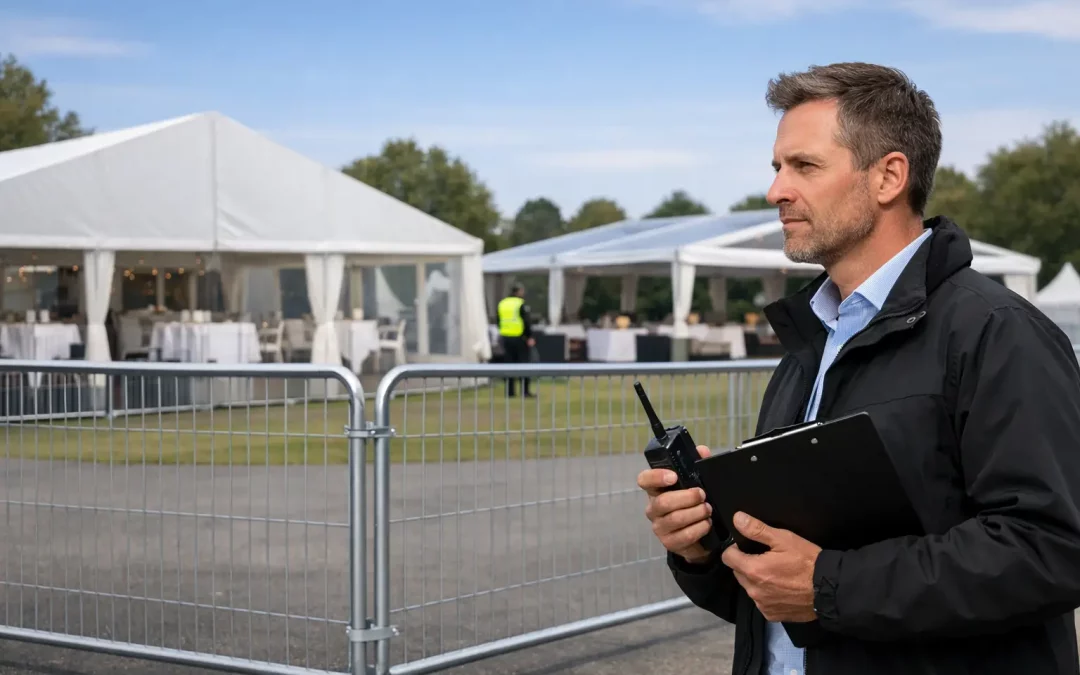
When a site starts taking shape, fencing is usually one of the first things in and one of the last things out. That alone tells you why event fencing hire matters. It does far more than mark a boundary. It controls access, protects the public, separates vehicles from pedestrians, supports stewarding plans and gives the rest of the build a framework to work around.
For experienced organisers, fencing is not a last-minute add-on. It is part of the operational design of the event. The right system, positioned properly and installed in the right sequence, can make build and live days markedly easier. Get it wrong and pressure shows up quickly – in queueing, access issues, exposed plant areas, confused contractors and avoidable safety risks.
What event fencing hire actually needs to do
At a practical level, event fencing has several jobs at once. It may need to create a secure perimeter, guide public entry, protect temporary structures, screen back-of-house operations or restrict access to plant, power and storage areas. On some sites it also plays a visual role, helping maintain presentation standards around hospitality areas, sponsor zones or civic locations.
That means there is rarely one fencing solution for the whole event. A showground with public attendance, vehicle movement and trade exhibitors will usually need a mix of systems. Heras-style panels may suit perimeter security and contractor compounds, while pedestrian barriers may be better for queue lines and front-of-house control. Solid hoarding can be useful where privacy, branding or visual screening matter more than visibility.
The right choice depends on what the fence is there to achieve. Security, crowd guidance and appearance are related, but they are not the same thing.
Planning event fencing hire early pays off
Fencing decisions affect more than the perimeter line on a site plan. They influence access routes, emergency egress, contractor arrival patterns and where you can safely place infrastructure. On tighter sites, especially in town and city-centre locations, fencing can determine whether deliveries move smoothly or start backing up before breakfast.
This is why fencing should be planned alongside structures, power, flooring and traffic management, not after them. If a marquee build requires articulated vehicles, telehandlers or crane access, the fence line and gate widths need to support that. If public routes cross near build zones, segregation needs to be thought through before the first lorry arrives.
For high-footfall events, early planning also helps with licensing and stakeholder confidence. Local authorities, venues and safety advisors will want to see that perimeter security, access control and crowd movement have been properly considered. A clearly thought-through fencing plan often reassures people that the wider operation is under control.
Choosing the right fencing for the site
There is no single best product for every event. Open rural ground behaves differently from hardstanding in a city square, and a food festival has different requirements from a motorsport hospitality build.
Perimeter fencing
Temporary mesh panel fencing is often the backbone of event fencing hire because it is versatile, quick to install and suitable for a wide range of sites. It works well for outer boundaries, contractor compounds and restricted operational areas. It is also relatively easy to adapt as site layouts evolve during pre-production.
That said, panel fencing is only as effective as its installation. Ground conditions, ballast requirements, exposure to wind and the risk of unauthorised movement all need attention. On open sites in Scotland and the north of England, weather can turn an ordinary installation into a problem if ballast and stability are under-specified.
Pedestrian barriers
For ingress, egress and queue management, pedestrian barriers often do the real heavy lifting. They help create order where people naturally bunch, pause or change direction. Around entrances, catering areas, bars and transport pick-up points, they can improve both safety and attendee experience.
They are not a replacement for perimeter fencing, though. They guide and channel movement rather than secure an area, so they need to be used with a clear understanding of crowd behaviour and stewarding plans.
Hoarding and screened fencing
Where appearance, privacy or public separation matter, screened systems can be the better fit. These are useful for premium hospitality, broadcast compounds, service yards and any location where back-of-house activity needs to stay out of sight. They can also reduce visual clutter on prestigious sites where presentation matters to clients, sponsors or host venues.
The trade-off is that screened fencing can create greater wind loading and may require more careful engineering and positioning. It can also reduce passive surveillance, so security planning needs to take that into account.
Site conditions change the answer
The best fencing plan on paper still has to work on the ground. Uneven terrain, soft grass, buried services, slopes and restricted access can all affect installation methods. So can the order in which different suppliers need to enter the site.
A wet build week can alter vehicle routes and force adjustments to gate positions. A heritage venue may restrict anchoring methods. A public park may require ground protection in traffic areas before fencing crews can operate efficiently. None of these issues are unusual, but they do need to be recognised early.
This is where experienced delivery teams add value. Fencing is straightforward until it is not. The difference is usually in the detail – where ballast sits, how gateways are braced, whether emergency exits remain practical at peak occupancy, and how the fencing interacts with structures, toilets, generators and service runs.
Event fencing hire and compliance
Professional buyers will already know that fencing has a safety role, but the paperwork matters too. Temporary infrastructure must support the event’s overall risk management approach, and fencing often sits within that conversation. Depending on the event, that may include site plans, fire routes, crowd management arrangements, traffic separation and public protection measures.
Good event fencing hire is not just about supplying enough panels. It is about making sure the installed system aligns with the operational plan. Gates should be where they are needed, not where they happen to fit. Emergency access should stay viable throughout build, live operation and breakdown. Restricted areas should be clearly defined and manageable for staff on the ground.
For public-facing events, there is also a reputational point. Poorly laid out fencing makes a site feel improvised. Clean lines, secure joins and sensible access points give organisers, stakeholders and attendees confidence before the event has even opened.
Why integrated delivery usually works better
On complex sites, fencing is most effective when it is coordinated with the rest of the infrastructure package. If one supplier is handling marquees, flooring, power, toilet units, ground protection and fencing, the site can be planned as a functioning whole rather than a collection of separate hires.
That matters during build. Sequencing becomes easier, clashes reduce and decisions can be made faster on site. A gate can be widened because a plant route has changed. A compound can move because welfare units need better access. A pedestrian lane can be adjusted because queue lengths are running longer than expected.
For event managers under time pressure, that joined-up approach removes a lot of friction. It also reduces the risk of gaps between suppliers, where everyone assumes someone else is dealing with a critical detail. Purvis Marquee Hire works in exactly this kind of environment, where fencing needs to support the wider operational picture rather than sit outside it.
Common mistakes buyers can avoid
One of the most common issues is underestimating how much fencing is needed beyond the public perimeter. Back-of-house areas, fuel or generator compounds, waste zones, crew parking interfaces and service corridors all need control. If these spaces are left loosely defined, operational standards drop quickly.
Another is treating fencing quantities as fixed too early. Initial plans are useful, but live projects move. Exhibitor layouts change, catering footprints expand and security expectations can tighten close to the event. A sensible specification allows for some flexibility rather than assuming the first drawing is final.
The last mistake is choosing on unit cost alone. Price matters, of course, but event fencing hire should be assessed on suitability, installation quality, responsiveness and the supplier’s understanding of live event conditions. A cheaper line on a quote can become expensive if it slows the build, creates safety concerns or needs reworking under pressure.
What to ask before you confirm a fencing package
A worthwhile conversation with your supplier should cover the purpose of each fenced area, expected footfall, vehicle movements, gate positions, site exposure, ground conditions and the interaction with other infrastructure. It should also cover programme – when fencing needs to go in, whether sections must be adapted during build, and how breakdown will work once the public has left.
If the answers stay at product level only, the planning is probably not deep enough. Fencing is part of site operations, not just a stock item.
The best event sites feel controlled without feeling over-managed. Good fencing helps create that balance. It gives the public clear boundaries, gives crews room to work and gives organisers fewer problems to solve on the day. When it is planned properly, it rarely draws attention to itself – and that is usually a sign it is doing exactly what it should.