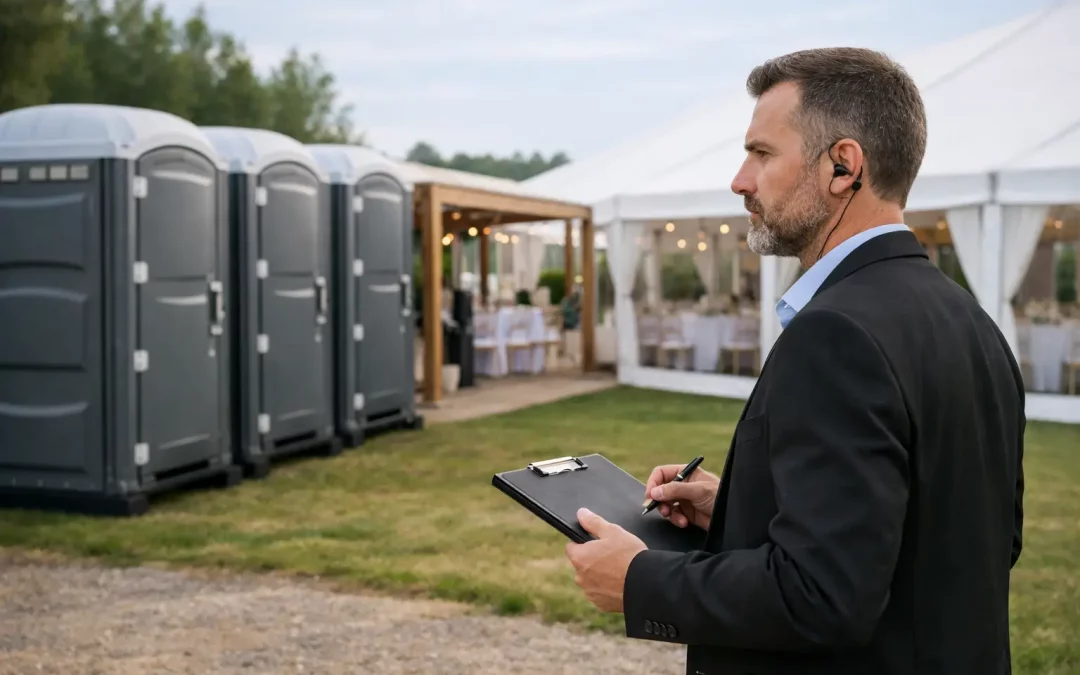
Anyone who has managed a live event knows that toilets only become visible when something has gone wrong. Queues build, servicing vehicles cannot get through, the ground around the units turns poor underfoot, or the location clashes with catering, backstage routes or public arrival points. That is why portable toilet hire for events should be treated as part of core site infrastructure, not a late-stage add-on.
For professional event organisers, the question is rarely just how many toilets to order. The real issue is how those units will function within the wider event plan. At large public events, hospitality builds, agricultural shows, festivals and city-centre sites, toilet provision affects crowd flow, welfare standards, servicing schedules, accessibility and the overall impression of the event. If the rest of the site is delivered to a high standard but washroom provision is poorly planned, people notice.
Why portable toilet hire for events is a planning issue
Toilets sit at the intersection of operations and audience experience. They need to be easy for guests to find, but not positioned so prominently that they dominate the site. They need reliable servicing access, but that access cannot interfere with pedestrian movement or production activity. They need to cope with peak demand, but without oversupplying units that take up valuable footprint and budget.
This is where experience matters. A small private function on a straightforward site calls for a very different approach from a multi-day event with hospitality structures, public zones, crew compounds and VIP areas. The right specification depends on audience profile, event duration, alcohol sales, catering provision, site exposure, ground conditions and whether the toilets are standalone units or part of a broader temporary infrastructure package.
At one end of the scale, standard portable toilets may be entirely suitable for short-duration public attendance. At the other, luxury toilet trailers, accessible units, urinal banks, baby change provision and back-of-house welfare facilities may all be needed in parallel. Good planning starts with how the site will actually operate, not with a generic ratio copied from a checklist.
Start with audience, dwell time and site behaviour
The biggest mistake in portable toilet hire for events is planning from guest numbers alone. Attendance matters, but behaviour on site matters just as much. A four-hour daytime event with high footfall is not the same as a full-day festival where visitors remain on site for ten hours. An agricultural show with dispersed attractions creates different demand patterns from a corporate hospitality event where guests arrive and dine at set times.
Think about when pressure points will occur. Arrival, interval periods, headline performances, meal service and bar peaks all influence washroom demand. If alcohol is being served, demand usually increases. If the audience includes families, accessible users or older visitors, the mix of unit types becomes more important. If there are separate public and staff zones, each needs its own practical provision rather than expecting one bank of toilets to serve the whole event.
For premium events, standards matter as much as capacity. Guests in a hospitality enclosure or branded corporate setting will expect a much higher washroom finish than visitors on a general admission site. In those cases, toilet hire becomes part of the event environment and should match the quality of the marquee, flooring, lighting and front-of-house presentation.
Location can make or break toilet performance
Where toilets go is often more important than the exact model chosen. Units need to be close enough to be useful, but far enough from food service, entrances and key viewing areas to avoid obvious conflict. They also need to be positioned on suitable ground, with consideration for drainage, stability and weather resilience.
On exposed or soft sites, the surrounding area can deteriorate quickly. Even a well-maintained unit will perform poorly if guests are walking through mud to reach it. That is why toilet placement should be considered alongside trackway, ground protection and pedestrian routing. If the event includes temporary structures, fencing and service compounds, those relationships should be planned together from the start.
Servicing access is another frequent pressure point. Waste units need to be emptied and restocked, sometimes during the event itself. If the only route to the toilets cuts through a live audience area, or if lorry access has not been considered properly, what looked workable on paper can become difficult very quickly. The same applies to city-centre sites, parks with restricted vehicle movement, and rural venues where access windows are limited.
The right unit mix is rarely one-size-fits-all
Not every event needs luxury toilet trailers, and not every event can rely on standard single units. Most larger sites benefit from a mixed approach. Public areas may use portable toilets and urinals for efficiency, while hospitality and VIP zones require higher-spec washroom trailers. Crew compounds often need practical welfare provision that can cope with long operating hours. Accessible units should be integrated properly into the site, not treated as an afterthought on the edge of the footprint.
This is where operational judgement matters. Too many premium units in the wrong place can waste budget. Too few accessible or staff facilities can create immediate problems. A balanced plan reflects the event’s audience, service level and site constraints.
For organisers managing high-profile or brand-sensitive environments, appearance matters too. Clean, well-positioned facilities with sensible screening can support the overall finish of the event. Poorly placed units, visible waste servicing or tired-looking compounds can undermine a carefully built guest experience.
Servicing matters more than most people think
Hiring the units is only part of the job. Keeping them operational is what protects the event. On longer or busier sites, servicing schedules need to be realistic and properly coordinated. That includes waste removal, consumables, cleaning and response planning if usage exceeds forecast.
This is especially important at multi-day events or where public attendance can fluctuate with weather and ticket sales. A sunny day can lift bar sales and footfall, which then changes toilet demand. If servicing has been planned too lightly, standards can drop fast. Once that happens, recovery during a live event is harder than most people expect.
A dependable supplier will ask practical questions about usage, access times, stand-by support and how service vehicles will move around the site. That conversation is often a good measure of whether the hire is being treated as a simple delivery or as part of event operations. The latter is almost always what serious organisers need.
Compliance, welfare and accessibility cannot sit in the margins
For public events, portable toilet hire for events is tied directly to welfare provision and site compliance. Requirements will vary depending on event type, expected attendance, local authority engagement and the presence of licensed areas, staff compounds or public camping. There may also be event-specific expectations around accessible provision, handwashing, lighting and overnight servicing.
The key point is that toilets should be considered within the event management plan, not outside it. They affect visitor welfare, staffing, cleaning schedules, public health measures and emergency planning. If the event has formal documentation for safety, traffic management, build sequencing and public operations, toilet provision should be part of that conversation from the start.
This is particularly relevant on complex sites where marquee structures, power, fencing, plant movement and guest circulation all interact. A supplier with broader event infrastructure experience will usually spot issues earlier because they are looking at the site as a working system rather than as a single hired product.
Why integrated delivery usually works better
On larger events, separate contractors for structures, power, toilets, fencing and flooring can work perfectly well, but only if someone is tightly managing the overlap. In practice, delays and clashes tend to happen at the handover points. A toilet bank may arrive before the access route is protected. A hospitality trailer may be placed before the final marquee entrance is confirmed. A service road may look clear on a plan but be blocked during live operation.
That is why many organisers prefer toilet provision to sit within a wider infrastructure package. When layout design, access, ground protection and build sequencing are coordinated together, there is less room for avoidable friction. For event teams under deadline pressure, that joined-up approach often saves more than it costs.
It also improves accountability. If one delivery partner understands the operational intent of the whole site, decisions can be made earlier and with fewer surprises. For companies such as Purvis Marquee Hire, that project-led approach is often what clients value most on high-pressure builds.
The best toilet plan is the one nobody has to think about on show day. It works quietly in the background, supports the audience properly and fits the site as if it was always meant to be there. That is usually the result of practical planning, honest assumptions and a supplier who understands how events really run.