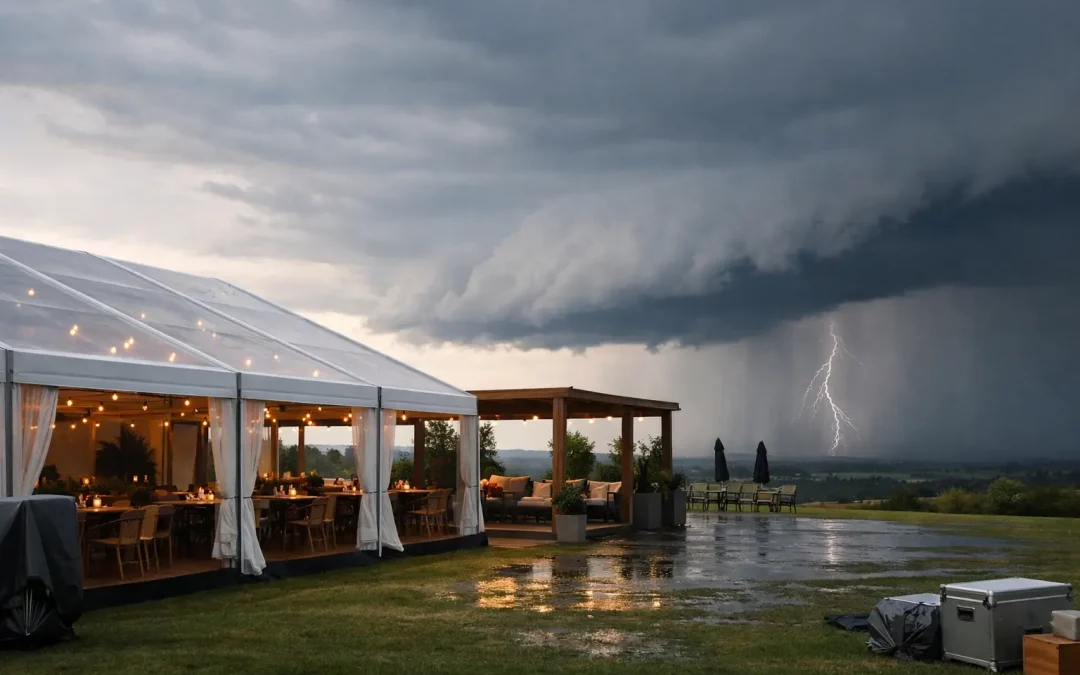
Anyone who has delivered a live event in Britain knows the weather forecast is only part of the story. A calm site inspection on Tuesday can become standing water, gusting wind and vehicle access issues by Friday morning. That is why weather contingency for outdoor events cannot sit as a short note in an event plan. It has to be built into the structure, the schedule, the site layout and the decision-making from the start.
For professional organisers, weather planning is not about assuming the worst. It is about protecting programme, public safety, contractor welfare and client expectations when conditions shift. On a large outdoor event, poor weather does not just affect guest comfort. It can slow builds, compromise ground conditions, disrupt power distribution, alter access routes and force changes to occupancy or service flow. The earlier that is recognised, the more options you keep.
What weather contingency for outdoor events really means
At an operational level, weather contingency for outdoor events means planning for a range of conditions rather than reacting to a single forecast. Rain, wind, heat and cold each create different problems, and each one affects temporary infrastructure in different ways. A site that performs well in light rain may become difficult under repeated heavy downpours. A structure suited to a sheltered venue may require a different approach on an exposed showground or coastal site.
Good contingency planning starts by asking practical questions. What happens if guest arrival coincides with heavy rain? Can catering continue if ground around the back-of-house area softens? Is there enough covered circulation space between key areas? If wind speeds rise, which activities are affected first and who has authority to pause them?
This is where experienced infrastructure planning matters. Weather does not only test the marquee or temporary structure. It tests the whole event system around it, including flooring, heating, cooling, drainage, lighting, vehicle routing, fencing and welfare provision.
Start with the site, not the forecast
Forecasts matter, but site behaviour matters more. Two venues in the same region can respond very differently to identical weather. Ground composition, slope, drainage, exposure, access width and nearby tree cover all influence how resilient a site will be.
A proper site assessment should look beyond where the main structure sits. You need to understand how build crews will access the location if rain arrives during installation, whether plant can move safely, and where pinch points may develop for pedestrians and service vehicles. Hard standings, turning circles, trackway needs and emergency routes should all be reviewed with poor weather in mind, not added later when the pressure is already on.
For agricultural shows, festivals and temporary hospitality compounds, soft ground is often the first operational problem. It affects lorry movements, plant setup, delivery timing and the ability to maintain clean, safe guest routes. Ground protection and flooring can make a major difference, but only if they are planned as part of the infrastructure package rather than treated as optional extras.
Structures must match the exposure level
Not every event structure is right for every site. That sounds obvious, but weather risk is often created when a layout is fixed before exposure, orientation and operational use have been properly considered.
Wind loading, anchoring requirements and structural configuration all need to reflect the specific site conditions. A city-centre installation with surrounding shelter has different demands from an open estate, racecourse or hillside venue. Internal use matters too. A dining marquee, production office, broadcast compound and public entrance canopy all behave differently under pressure because occupancy, equipment load and traffic levels are different.
The right solution is rarely just bigger or heavier. Sometimes it is about changing orientation to reduce pressure on entrances, adding linked structures to protect circulation, or specifying solid flooring where footfall and weather together would otherwise degrade the guest experience. In some cases, a phased plan is sensible, with optional add-ons ready if the forecast worsens. That approach gives organisers flexibility without overcommitting budget too early.
Build weather resilience into the programme
One of the biggest mistakes in outdoor delivery is treating weather as a show-day issue. In reality, many weather-related problems begin during the build and derig.
If your programme is tight, wet or windy conditions can compress already narrow installation windows. Vehicle movement slows. Ground becomes less predictable. Plant may need more careful coordination. Finishing trades can be delayed because the structure handover happens later than planned. A weather contingency plan should therefore include time contingency, not just equipment contingency.
That may mean earlier ground preparation, longer installation periods for exposed sites, or clearer trigger points for adapting the sequence of works. If poor conditions are expected, it is often better to adjust the order of delivery before crews arrive than to improvise once the site is congested. Calm decisions made 48 hours out are usually cheaper and safer than urgent changes made on build day.
Plan for rain as an access and welfare issue
Rain tends to be underestimated because people focus on the obvious image of wet guests. In practice, sustained rain affects almost every part of event delivery.
Guest arrival routes need to stay usable and presentable. Back-of-house areas need enough protection for catering, production and staffing functions. Toilet locations must remain accessible without creating churned-up, slippery routes. Electrical infrastructure needs careful positioning to keep distribution safe and protected. Even branding can be affected if high-traffic areas become difficult to maintain.
Covered walkways, entrance matting, hardwearing flooring and sensible drainage planning often have more impact than people expect. So does the positioning of support areas. If the site layout forces staff, suppliers or guests to cross exposed ground repeatedly, wet weather will magnify the weakness very quickly. A well-planned event gives people dry, stable movement between the areas that matter most.
Wind requires clear thresholds and authority
Wind is different from rain because it can change the operating envelope of the event itself. This is where contingency planning needs to be disciplined. There should be clear thresholds, agreed in advance, for reviewing operations, restricting certain elements or pausing activity.
That applies not only to temporary structures but also to signage, fencing, catering equipment, furniture, staging elements and any lightweight dressing. A site can look operationally ready while smaller components become the first point of failure. The more moving parts an event has, the more important it is to define who monitors conditions, who receives updates and who makes the call when an adjustment is needed.
For larger events, this should sit within a wider command structure. Weather monitoring, contractor communication and escalation routes need to be clear. If responsibility is vague, decisions happen too slowly. If authority is defined properly, the event team can respond without confusion.
Heat and cold still need contingency in Britain
British event planning often gives most attention to rain and wind, but hot and cold conditions can be just as disruptive. Heat affects guest comfort, staff welfare, refrigeration performance and enclosed internal temperatures. Cold affects dwell time, catering demand, equipment performance and the practical use of hospitality spaces.
Heating and cooling should be considered in relation to occupancy, structure type and use pattern. A daytime exhibition space has different requirements from an evening hospitality event. Likewise, ventilation needs to be thought through properly. Closing a structure up against poor weather may solve one issue while creating another if the internal environment becomes uncomfortable.
The point is not to overengineer every event. It is to match environmental control to realistic operating conditions, with enough flexibility to respond if those conditions shift.
Communication is part of the contingency plan
Even the best infrastructure plan can be undermined by poor communication. Teams need to know what the weather plan is, what the trigger points are and what changes are possible without causing knock-on issues elsewhere.
That includes suppliers, venue contacts, production teams, caterers, security and client stakeholders. If rain is expected overnight, does everyone know the revised vehicle route? If wind picks up, do all departments understand which external items must be removed or secured? If guest arrival plans change, is front-of-house briefed early enough to manage it confidently?
This is where a delivery partner with hands-on event experience adds real value. Weather decisions rarely sit in isolation. They affect timing, labour, access and compliance all at once. A practical plan connects those pieces rather than treating them as separate conversations.
The best contingency is designed in early
By the time severe weather appears on the forecast, your room for manoeuvre is already narrowing. The most reliable outdoor events are not the ones that hope conditions hold. They are the ones designed to absorb change because the infrastructure, layout and operational planning have already accounted for it.
For teams delivering major public, corporate and broadcast events, that means treating weather as a core planning input from the first site meeting onwards. Purvis Marquee Hire sees this regularly across exposed rural sites, formal hospitality environments and high-pressure city-centre builds. The pattern is consistent: when contingency is built in early, the event team stays in control for longer and the outcome is stronger.
Weather will always be one of the few variables you cannot control. What you can control is how well the event is prepared to keep moving when conditions become less cooperative.