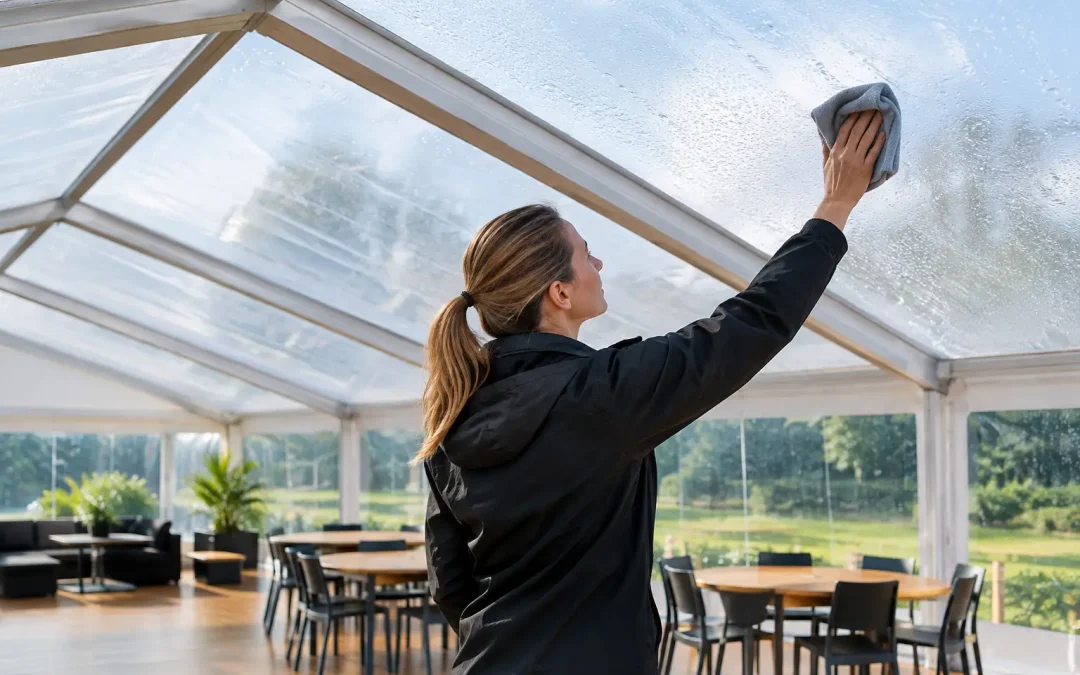
A clear roof lining and dry floor can quickly lose their impact when moisture starts dripping from the structure above guests, equipment or catering areas. Knowing how to reduce marquee condensation is therefore not a finishing detail. It is a core part of planning a comfortable, safe and professionally presented temporary venue – particularly during colder months, overnight builds and high-occupancy events.
Condensation is manageable, but it cannot be addressed by adding heaters at the last minute. The right solution depends on the structure, the site, guest numbers, internal activity, event duration and the difference between indoor and outdoor temperatures. It needs to be considered alongside flooring, power, access and the build programme.
Why marquee condensation happens
Condensation forms when warm, moisture-laden air inside a marquee meets a colder surface, such as the roof fabric, frame or glazed panel. Once that surface falls below the air’s dew point, water vapour turns into droplets. In an event setting, that moisture comes from several sources: people, catering equipment, wet coats, tracked-in rain, temporary toilets, bar operations and heaters that produce water vapour as part of combustion.
A busy evening reception can introduce a significant amount of moisture into an enclosed space. Add cold external temperatures and a roof that has been exposed to the night air, and the conditions for condensation are in place. It is often most visible early in the morning, after a cold night, or when the marquee is heated quickly just before guests arrive.
The practical risk is not simply an unattractive roof. Drips can affect guest comfort, create slippery patches on hard flooring, damage production equipment and compromise the presentation of linen, furniture or branded installations. In high-spec hospitality spaces, even a small amount of visible moisture can distract from an otherwise well-delivered event.
Start with the structure and site plan
The most effective way to reduce marquee condensation begins before the build team arrives. A structure should be specified for its intended use, not simply its guest capacity. A daytime agricultural show, a winter awards dinner and a temporary broadcast workspace may require very different environmental controls despite having similar floor areas.
Allow enough internal volume for the number of people, furnishings and operational zones. A tightly packed structure has less air volume to absorb moisture and is harder to ventilate evenly. Separating kitchens, bars, cloakrooms and other moisture-generating operations from the main guest area can also make a meaningful difference.
Site conditions matter as well. Ground that is saturated, uneven or prone to surface water increases the moisture load beneath and around the structure. Ground protection, proper drainage routes and a raised, well-sealed flooring system help to prevent damp rising into the venue. They also give heating equipment a more stable environment in which to perform.
For larger sites, access and positioning should be planned with prevailing wind, exposed terrain and vehicle movements in mind. Ventilation openings need to be useful and controllable, rather than placed where wind-driven rain will enter the structure or where event operations make them impractical.
Use the right flooring and roof lining
A proper sub-floor and finished floor do more than improve appearance and accessibility. They help isolate the internal environment from cold, wet ground. Cassette flooring or other raised systems create a separation between the event space and the surface below, while sealed edges and appropriate thresholds limit draughts and water ingress.
Roof linings are equally valuable. A lining provides a warmer internal-facing surface than bare PVC fabric and can absorb or conceal small amounts of moisture that would otherwise form visible droplets. It also improves the visual finish and helps the marquee feel more like a purpose-built venue.
However, linings are not a substitute for environmental management. If humid air is allowed to build up in a cold marquee, moisture can still form behind the lining and eventually show through or drip at lower points. Treat lining as one part of the specification, alongside controlled heating and ventilation.
Heat the space evenly, not aggressively
Heating is frequently misunderstood in the fight against condensation. Warm air can hold more moisture, so heating the marquee improves comfort and can reduce the chance of water settling on internal surfaces. But heating alone does not remove moisture. If warm, humid air is trapped against a cold roof, condensation may become more pronounced when the heating is turned down or switched off.
The aim is steady, distributed heat rather than a rapid blast shortly before doors open. Indirect-fired heaters are generally the right choice for enclosed event spaces because combustion takes place outside the marquee and clean warm air is ducted in. This avoids introducing additional moisture and fumes directly into the venue.
Heater capacity should be calculated around marquee volume, external weather, insulation measures, door use and the expected occupancy. A structure with frequent service access, open catering doors or large glazed elevations will lose heat more quickly than a fully enclosed dinner space. Duct runs should be positioned to avoid hot and cold zones, keeping air movement away from delicate displays while ensuring guests near perimeter walls are not left in the cold.
For multi-day events, maintain a low background temperature overnight where practical. Letting the internal temperature collapse can cool the roof structure significantly, meaning a rapid warm-up the following morning meets cold fabric and trapped moisture. A controlled overnight approach usually produces better results and a more reliable opening routine.
Ventilation must be part of the answer
Ventilation is what removes humid air from the marquee. It may seem counterintuitive to introduce outside air during cold weather, but a measured exchange of air is often essential. Cold outside air generally carries less absolute moisture than warm internal air. Once warmed, it can help absorb moisture and lower relative humidity.
The right approach will vary. On a mild, dry day, selectively opening sidewalls, doors or high-level vents may be enough. During a winter corporate event or a long-running hospitality programme, mechanical ventilation and carefully managed extraction may be more appropriate, particularly near kitchens, bars and high-occupancy zones.
Avoid creating through-draughts across dining tables, registration desks or seated audiences. Ventilation should support comfort, not compete with it. A competent temporary structure supplier will coordinate vent positions, heater ducts, doors and internal layout so air can circulate without becoming disruptive.
Control moisture at its source
The biggest gains often come from operational details. Catering teams should use extraction where possible and keep kitchen operations in a separate service tent or partitioned area. Dishwashing, boiling equipment and open-door refrigeration all contribute to humidity. Toilets should be properly ventilated and located so queues do not pull cold, wet air straight into the main reception space.
Wet-weather planning is just as important. Covered entrances, mat wells, coir matting and adequate cloakroom capacity prevent rainwater being carried through the venue. If guests are arriving from a muddy showground or exposed car park, provide enough protected transition space for coats, umbrellas and footwear before they reach finished flooring.
During the event, the site team should monitor conditions rather than wait for drips to appear. Visible misting on windows, damp patches near eaves or a persistent heavy atmosphere are early signs that humidity is rising. Adjusting ventilation, heater output or door management early is far simpler than correcting a saturated internal environment later.
Build time into the programme
A marquee needs time to settle after construction, particularly on a cold or wet site. Completing the build immediately before event dressing leaves little opportunity to dry flooring, warm the interior gradually or identify weak points around doors and joins. Where the programme allows, build early enough to establish a stable internal climate before furniture, production equipment and catering move in.
This matters even more where a venue changes use across several days. A daytime exhibition followed by an evening dinner, for example, brings changing occupancy, catering activity and heating demands. The environmental plan should be reviewed as part of the live-event schedule, not treated as a one-off installation decision.
At Purvis Marquee Hire, this is considered within the wider temporary infrastructure plan: structure selection, flooring, heating, power distribution, access, site management and the realities of the event timetable all need to work together.
A better result comes from coordinated planning
There is no single product that guarantees a condensation-free marquee in every condition. Severe cold, sustained rain, high guest density and intensive catering can all increase the challenge. The dependable approach is to reduce moisture entering the space, prevent damp rising from the ground, heat evenly, ventilate deliberately and give the structure time to reach stable conditions.
When those decisions are made early, condensation becomes far less likely to interrupt the guest experience or the operational running of the event. That gives the event team more time to focus on the programme, the audience and the delivery standards that people will remember.