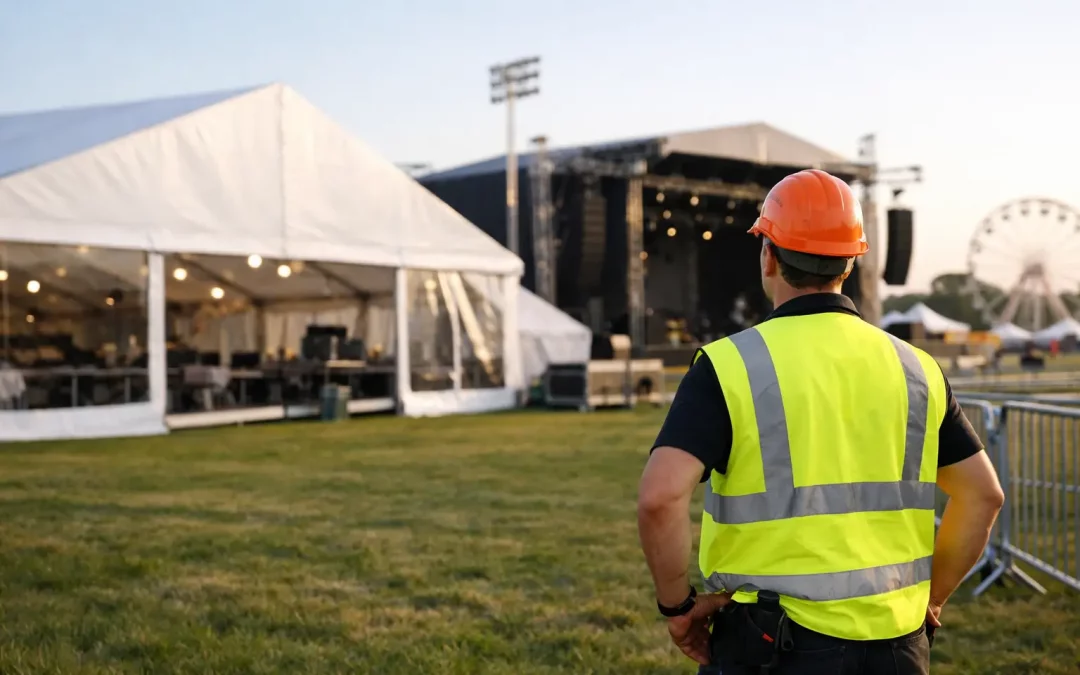
When a festival site starts to move from plan to reality, the pressure points appear quickly. Vehicle routes that looked straightforward on a drawing become bottlenecks on wet ground. A hospitality area needs power, lighting and flooring that can cope with heavy footfall. Public zones, backstage compounds and welfare facilities all need to work together from day one. That is why festival infrastructure hire is rarely just about putting a structure on a field.
For organisers, the real task is building a temporary site that can operate safely, efficiently and under pressure. The marquee or clearspan is only one part of it. What matters just as much is whether the infrastructure package supports access, circulation, power distribution, welfare, branding, weather resilience and compliance across the whole event footprint.
What festival infrastructure hire should actually cover
At a professional level, festival infrastructure hire means much more than temporary shelter. It should include the physical structures people see, along with the operational systems that keep the site functioning behind the scenes.
That often starts with large marquees and temporary structures for entrances, bars, VIP hospitality, production offices, accreditation, medical areas, catering, storage and crew welfare. From there, the scope usually expands into flooring, trackway or ground protection, fencing, toilets, lighting, heating, cooling, generators, distribution, furniture, branding and practical layout support.
The point is not to hire every element from one place at all costs. It is to make sure the parts are designed to work together. On a busy festival build, gaps between suppliers can create more problems than the kit itself. If the lighting contractor needs access after the flooring team, or the generator location conflicts with public circulation, the programme starts slipping. Good infrastructure planning reduces those clashes before they reach site.
Why site conditions shape every hire decision
No two festival sites behave the same way. A city-centre event has different pressures from a rural greenfield build. A racecourse, estate, showground or public park will each bring their own access rules, loading restrictions and environmental considerations.
Ground conditions are usually the first major variable. Soft grass, uneven terrain, hidden services, slopes and drainage issues all affect what can be installed, how it is anchored and how vehicles move during build and break. Flooring and ground protection are not cosmetic upgrades in those conditions. They can be essential for public safety, equipment protection and keeping the programme on track after poor weather.
Exposure matters too. Sites in Scotland and the north of England can shift quickly from calm to challenging. Wind loading, rainwater management, ballast requirements and heating provision need to be considered early, not treated as late additions. The cheaper option on paper can become the expensive one if it fails to cope with the site.
This is where experienced festival infrastructure hire makes a practical difference. It is not just about stock availability. It is about knowing when a standard approach will work and when the site needs a different build sequence, a different structure specification or more protection underfoot.
Festival infrastructure hire and the event programme
Event organisers often think about infrastructure in terms of opening day. In reality, the build window is just as important. A well-specified structure package can still cause problems if the delivery sequence does not fit the wider programme.
Large festivals involve overlapping trades, restricted vehicle movements and fixed deadlines for inspections, fit-out and handover. If production, staging, catering and bars all need access to the same area, installation timing becomes critical. Temporary structures should be designed and scheduled around those dependencies.
That means asking practical questions early. Which compounds need to go in first? Where do forklifts and lorries turn? What needs to be ready for dressing teams, power contractors or branding installers? Which areas require early sign-off for licensing or safety inspections?
Strong suppliers do not just provide equipment. They help map infrastructure against the event timeline so that key spaces are available when other contractors need them. That kind of coordination is often what protects the opening date.
Compliance is not separate from delivery
For public events, compliance and operations are part of the same job. Structures, exits, fire points, emergency routes, occupancy loads and site layouts all need to align with the event’s safety planning. If they do not, problems surface during inspections, or worse, during the live event.
Festival infrastructure hire should support that process with proper documentation, clear specifications and realistic site planning. Depending on the scope, that may include structural calculations, loading data, fire certification, build sign-off information and layout drawings that can be used in wider event plans.
This is especially important where multiple functions are being housed in temporary spaces. A backstage office has different requirements from a public bar. A premium hospitality structure has different expectations from a welfare tent. The right solution depends on use, occupancy, finish level and how the area connects with the rest of the site.
There is also a balance to strike. Over-specifying every area increases cost and can complicate the build. Under-specifying creates operational and safety risks. The best approach is usually a site-specific one, based on actual use rather than assumptions.
Front of house gets the attention, back of house keeps the event moving
Festival audiences notice the entrance experience, the bars and the premium spaces. Organisers know that the back-of-house areas often matter just as much. Production offices, crew catering, welfare units, storage tents, accreditation spaces and service corridors are what allow the public-facing areas to function.
This is often where festival infrastructure hire needs the most thought. Back-of-house zones tend to be squeezed into awkward footprints, added late or expected to cope with more use than first planned. They still need sensible access, lighting, flooring and weather protection. If they fail, the impact is operationally immediate.
A well-run site treats those support areas as core infrastructure rather than an afterthought. That includes making sure staff and supplier routes do not conflict with audience movement, and that service spaces remain practical in poor weather and long operating hours.
One supplier or several – what works best?
There is no universal answer. Some festivals prefer to appoint specialist contractors for each element. That can work well when the client team has the capacity to coordinate interfaces closely. It can also make sense where an event has long-standing technical partners already embedded in the delivery model.
For other projects, a more integrated package is the better route. When one supplier can design, supply, build and manage a broad section of the temporary infrastructure, decision-making tends to be faster and site coordination simpler. It reduces the number of handovers and makes accountability clearer when timings are tight.
The trade-off is that not every supplier has the stock, planning ability or site management experience to handle large-scale, high-pressure work. So the question is not simply whether to consolidate. It is whether the supplier has the operational depth to take that responsibility on properly.
For complex events, that often means looking beyond price and asking harder questions about project management, build crews, transport planning, documentation, contingency planning and experience on comparable sites. Purvis Marquee Hire, for example, works best where temporary structures are only one part of a broader operational challenge.
What to ask before confirming a festival infrastructure hire package
The early conversations usually tell you a lot. A capable supplier should want to understand the site, audience profile, vehicle access, programme, finish standards and risk profile before recommending a package.
They should also be prepared to discuss the awkward realities. What happens if the ground deteriorates during build? How will power and lighting routes affect flooring and public movement? Can the structure be installed within the access restrictions? Is there enough stock flexibility if the footprint changes? Those questions are not signs of complexity for the sake of it. They are how delivery problems are prevented.
It is also worth checking who will manage the job on site. Strong pre-event planning matters, but festivals are live environments and plans do move. You need a team that can respond calmly, communicate clearly and keep the build progressing when conditions change.
The value of getting it right early
Well-planned festival infrastructure is often invisible to the public, and that is usually a sign it is doing its job. People move easily. Staff can operate properly. Suppliers can get where they need to go. Wet weather does not turn key areas into dead ground. Premium spaces feel finished, and service areas remain functional.
That result rarely comes from a last-minute hire list. It comes from thinking about infrastructure as part of the event operation from the start – not a bolt-on once the site plan is mostly fixed.
If you are planning a festival, the smartest question is not just what structures you need. It is what the site needs in order to open safely, trade efficiently and hold up under pressure. Start there, and the rest of the package tends to make much more sense.